
MD Notebook Diary 1 Day 1 Page

365 days, one page a day.
A time to reflect and weave your thoughts into words.
The events of the day, and the feelings that arise in quiet moments.
Encouraging yourself, and sometimes being gentle with yourself, as you carefully build one day upon the next.
The MD Notebook Diary is designed to quietly accompany you through those days, accepting them just as they are.
Over time, the memories captured in its pages become a “dictionary of your life”—a book that may one day become a source of strength for the person you are yet to become.
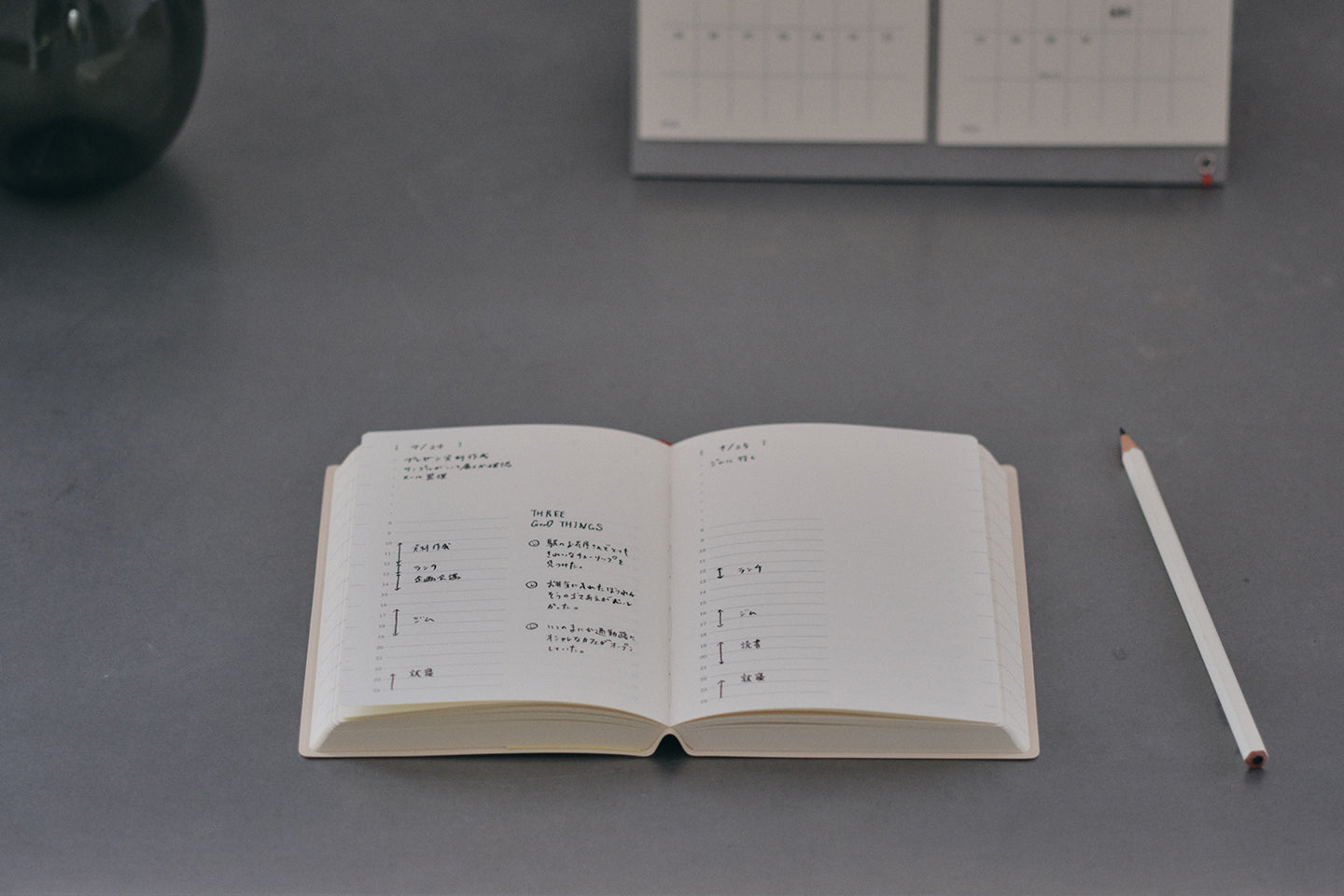
The printing and thread-stitch binding processes are the same as those used for the MD Notebook and MD Notebook Diary. The MD Notebook Diary 1 Day 1 Page then undergoes a specialized binding process developed specifically for its format.
First, each thread-stitched book block is individually trimmed along three edges. The two ribbon bookmarks, an iconic feature of the MD Notebook Diary, are then inserted and carefully attached by hand, with their lengths precisely aligned.
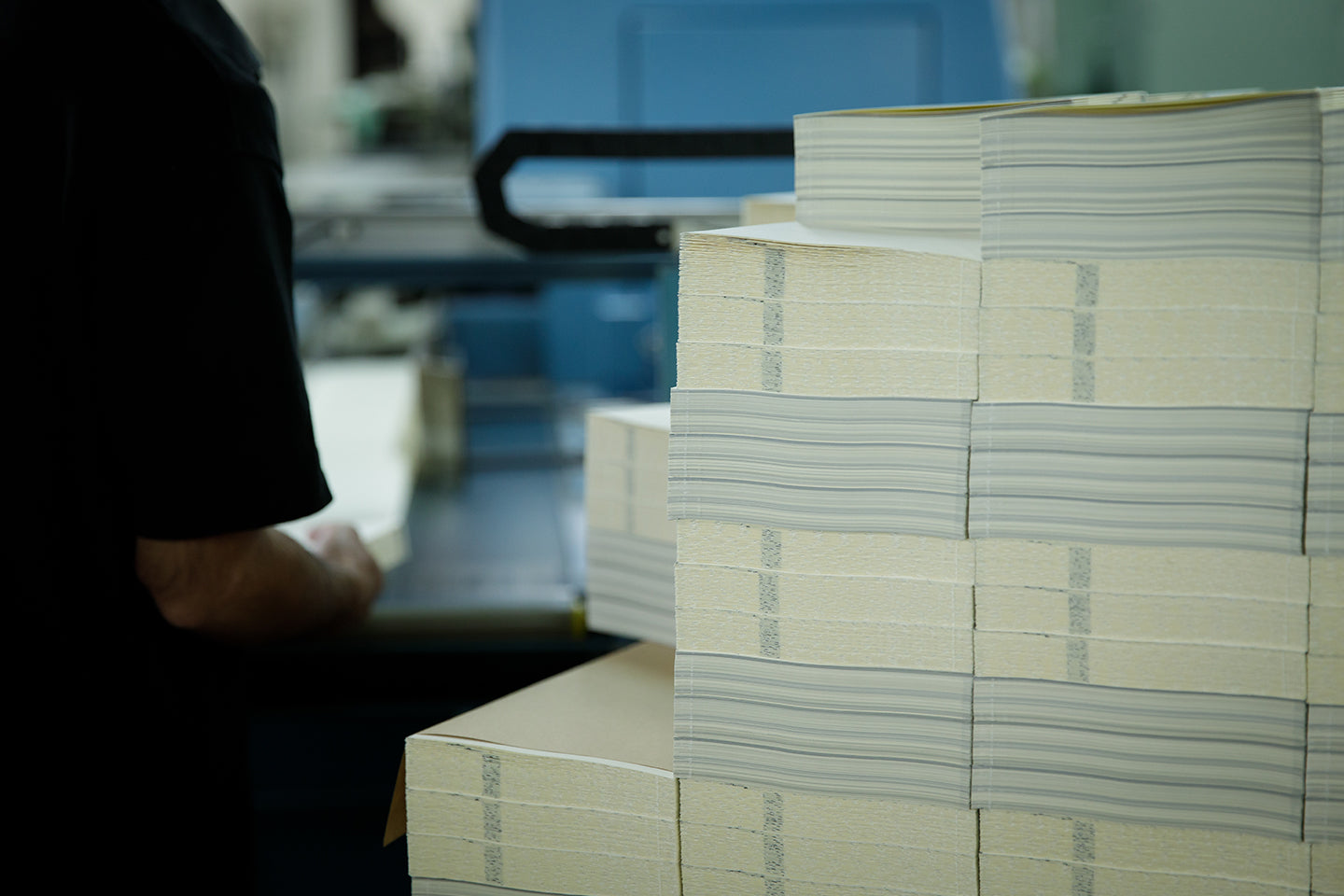
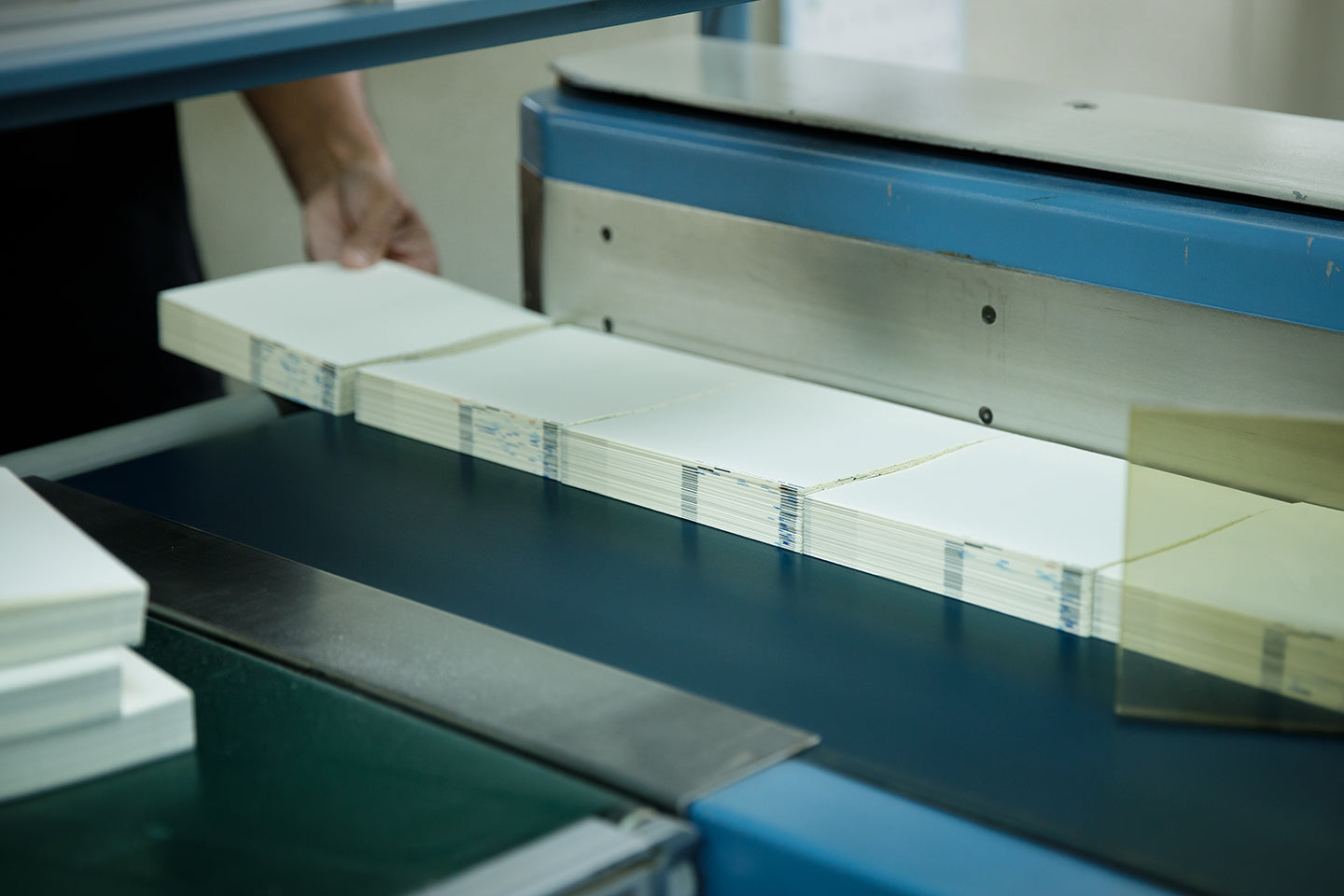
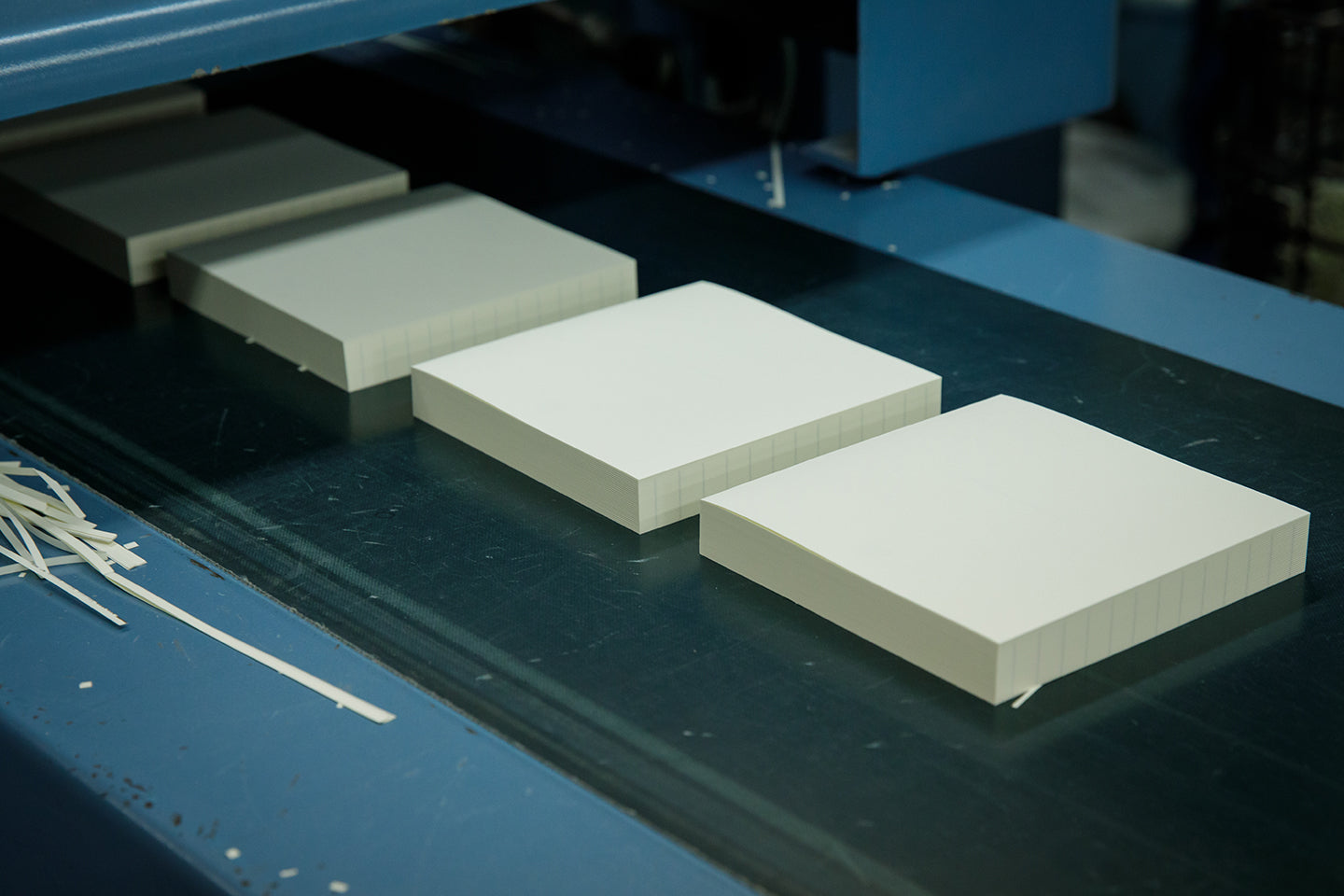
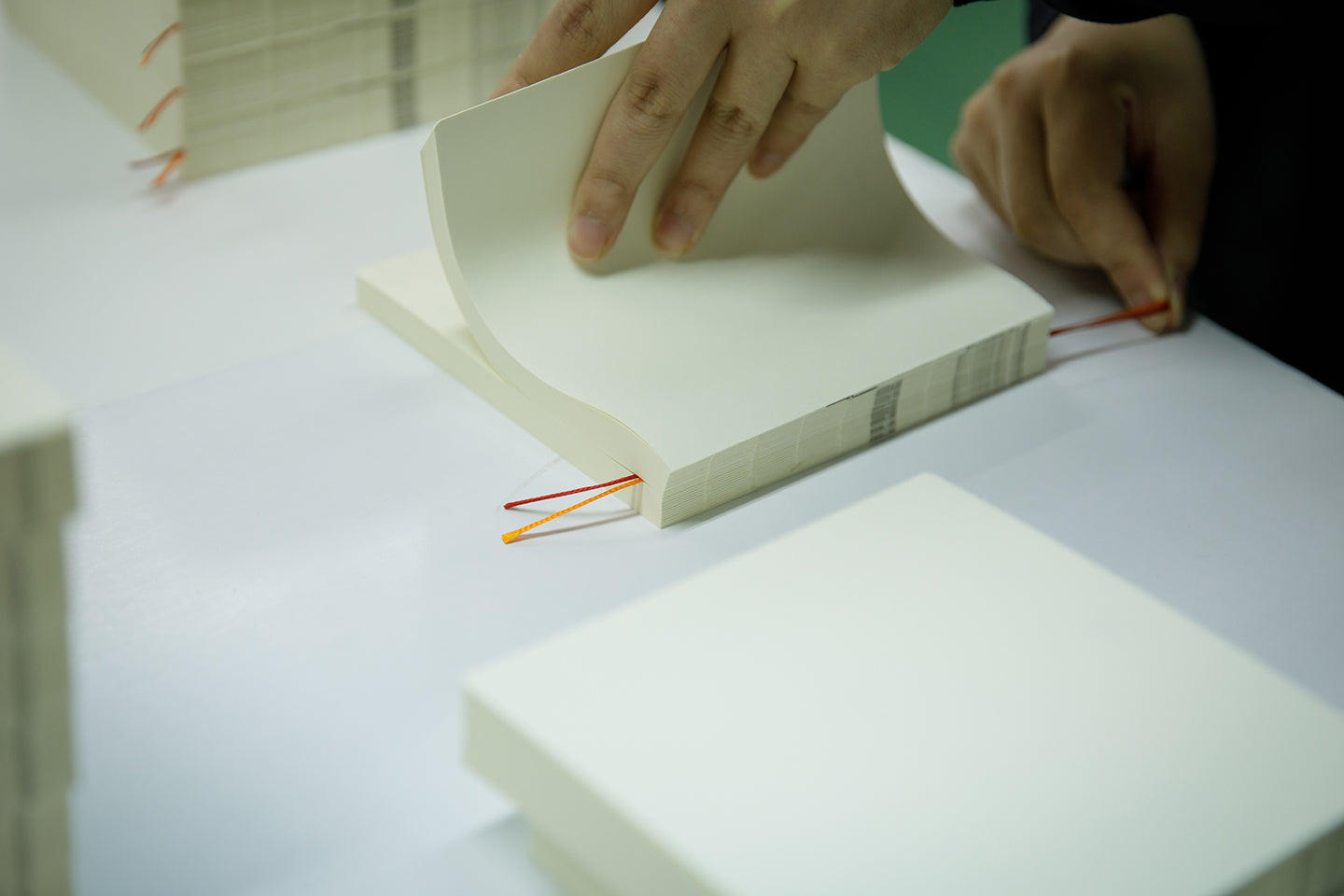
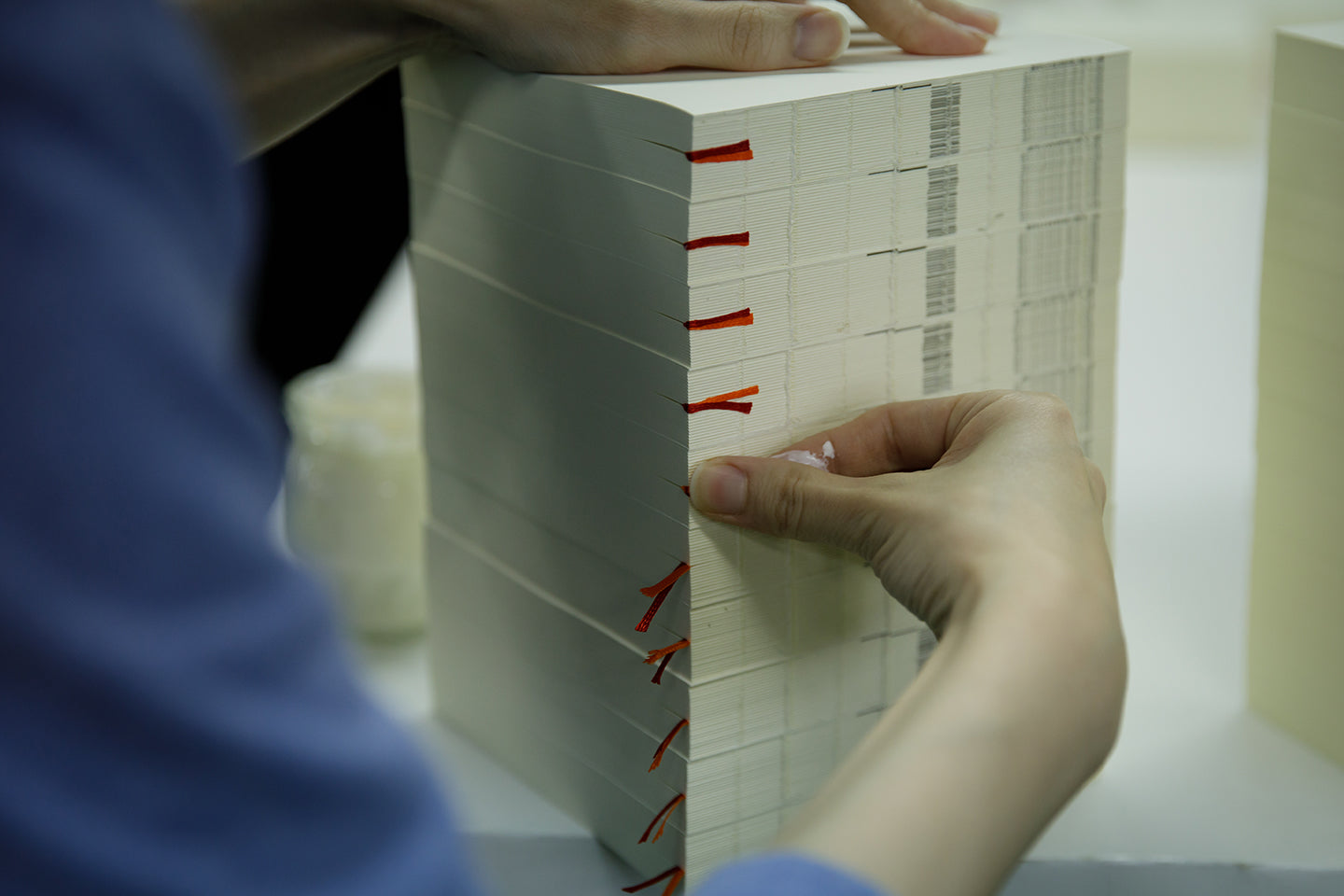
Next, the book undergoes a rounding process to create the rounded spine, one of the defining features of this diary. This binding technique is also used for dictionaries, Bibles, and high-end photography books. It makes thick books durable and easy to open, while helping protect the spine from damage over years of use.
The square book block is pushed upward from the fore-edge to create a gentle curve along the spine. It is then refined by machine to achieve a smooth, beautiful curve.
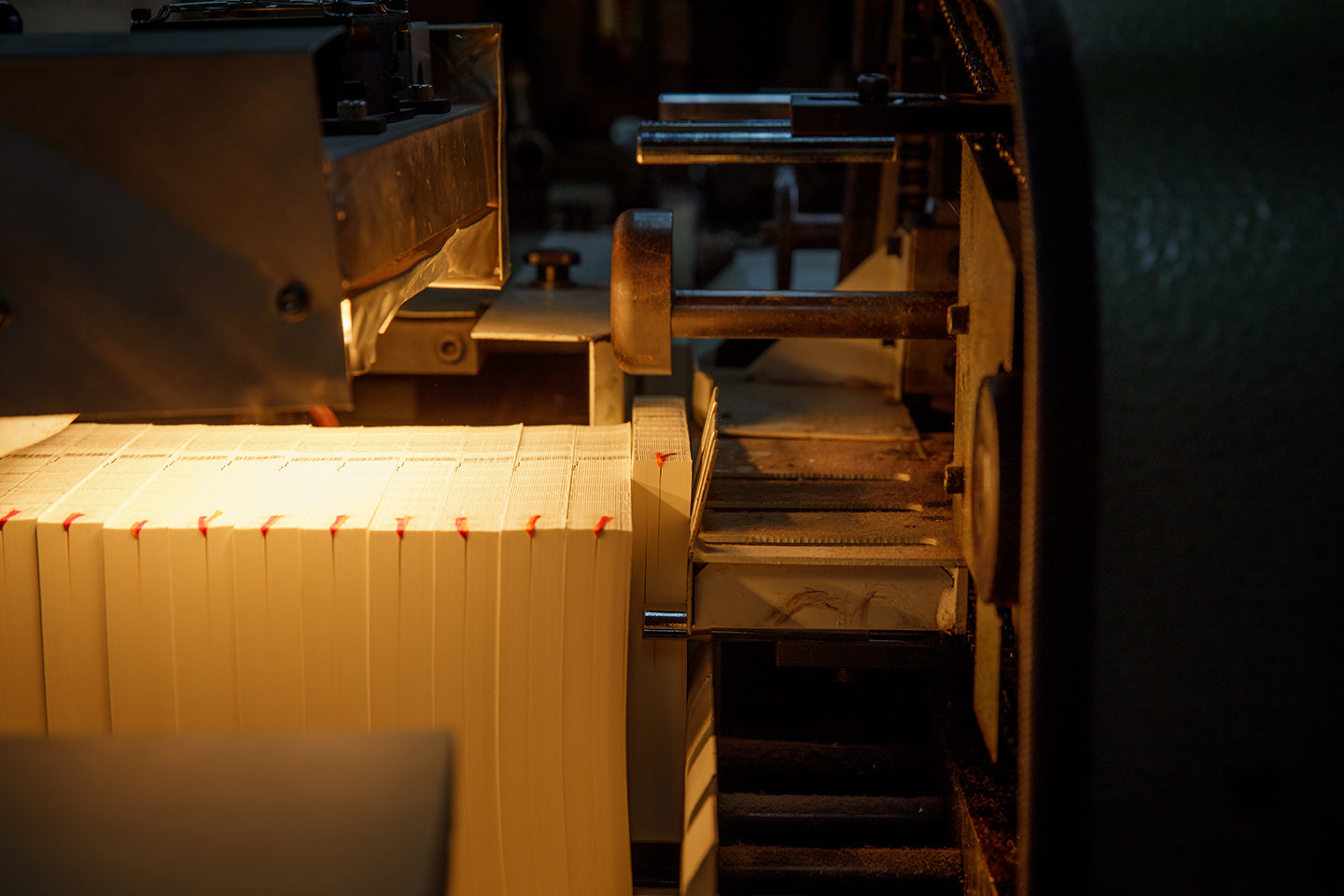
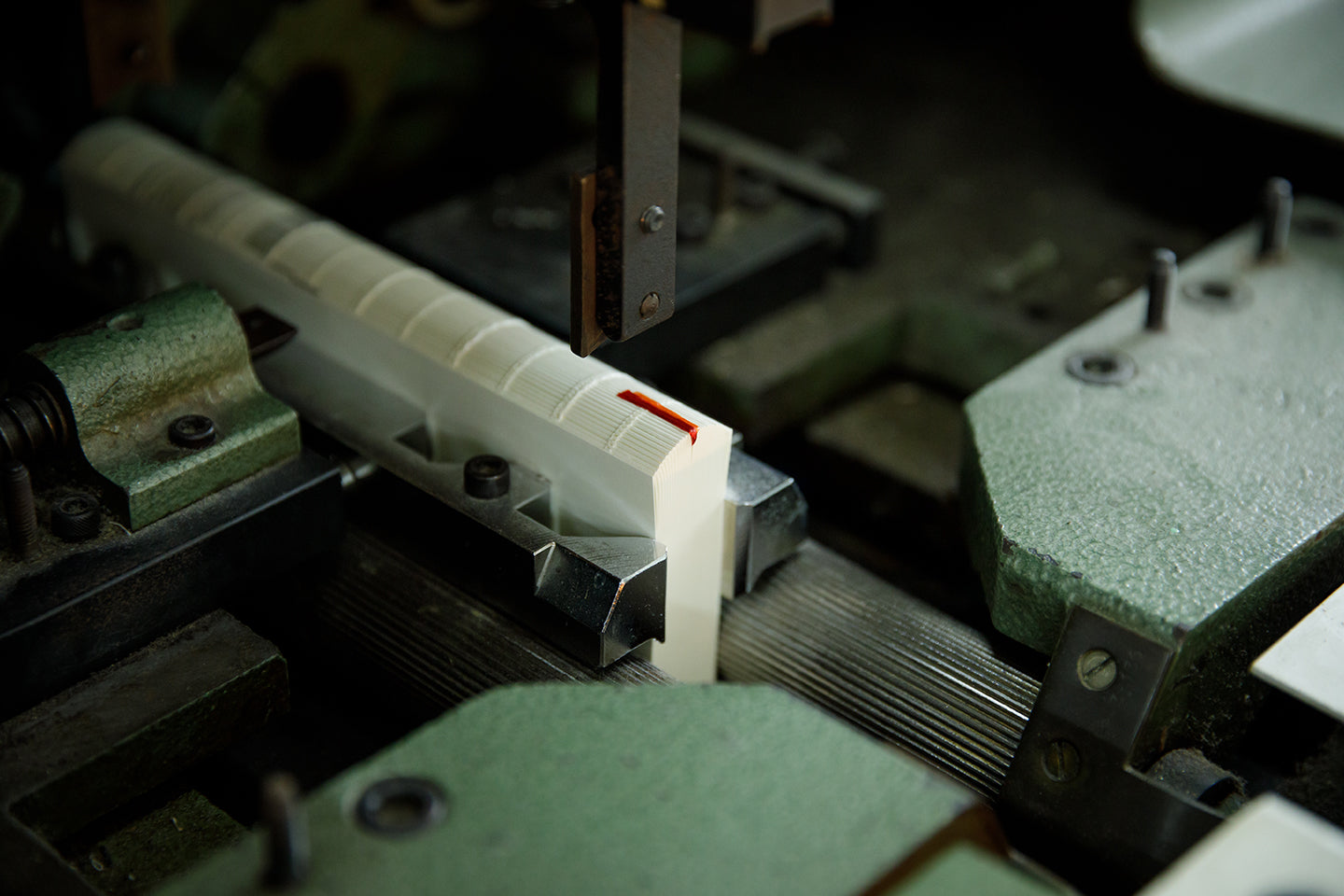
Once the books have undergone the rounded-spine process, they are stacked in a way that resembles architecture or sculpture. The books are deliberately offset from one another—not simply for visual effect, but also to prevent glue from reaching the book below when adhesive is applied to the spine in the next step.
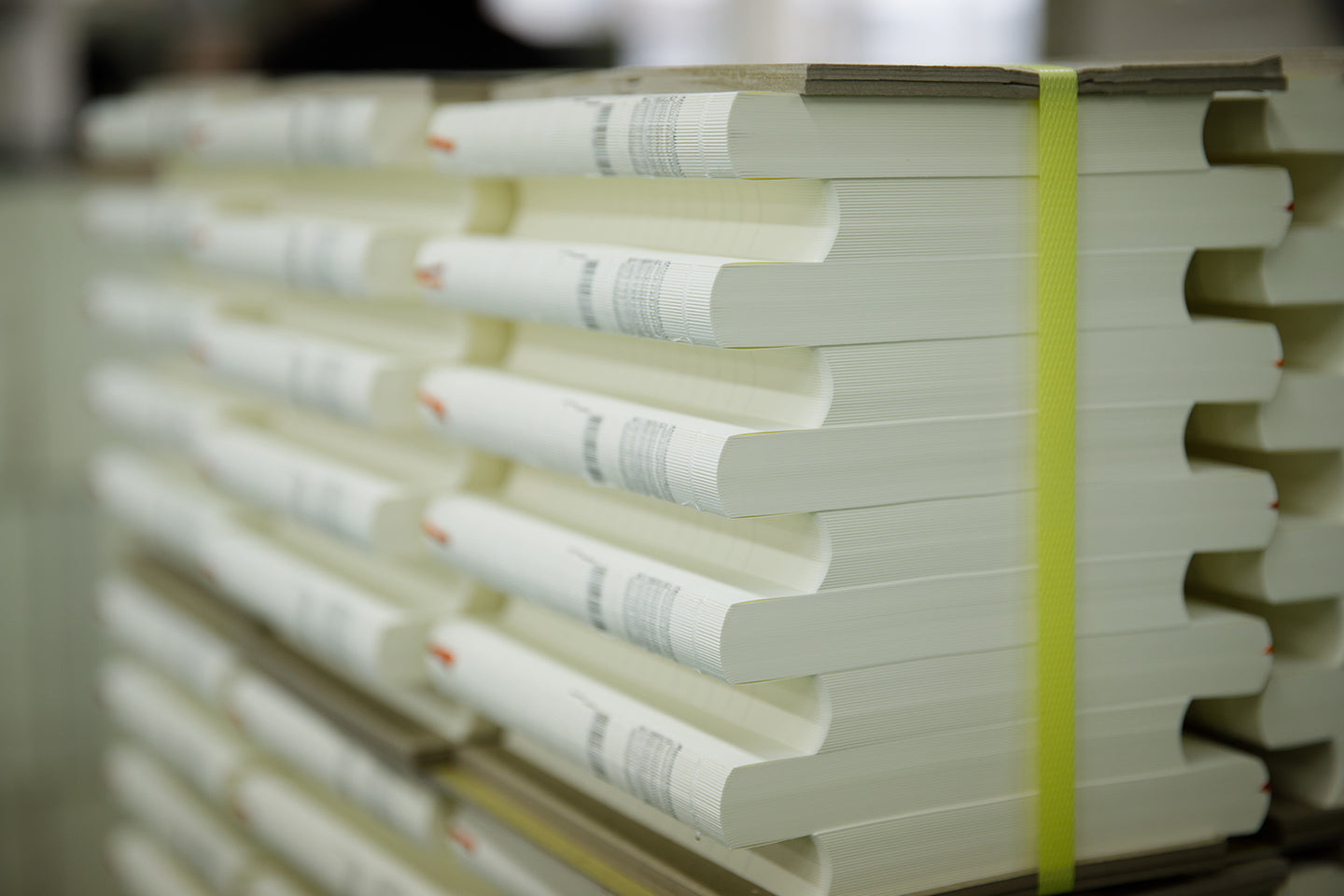
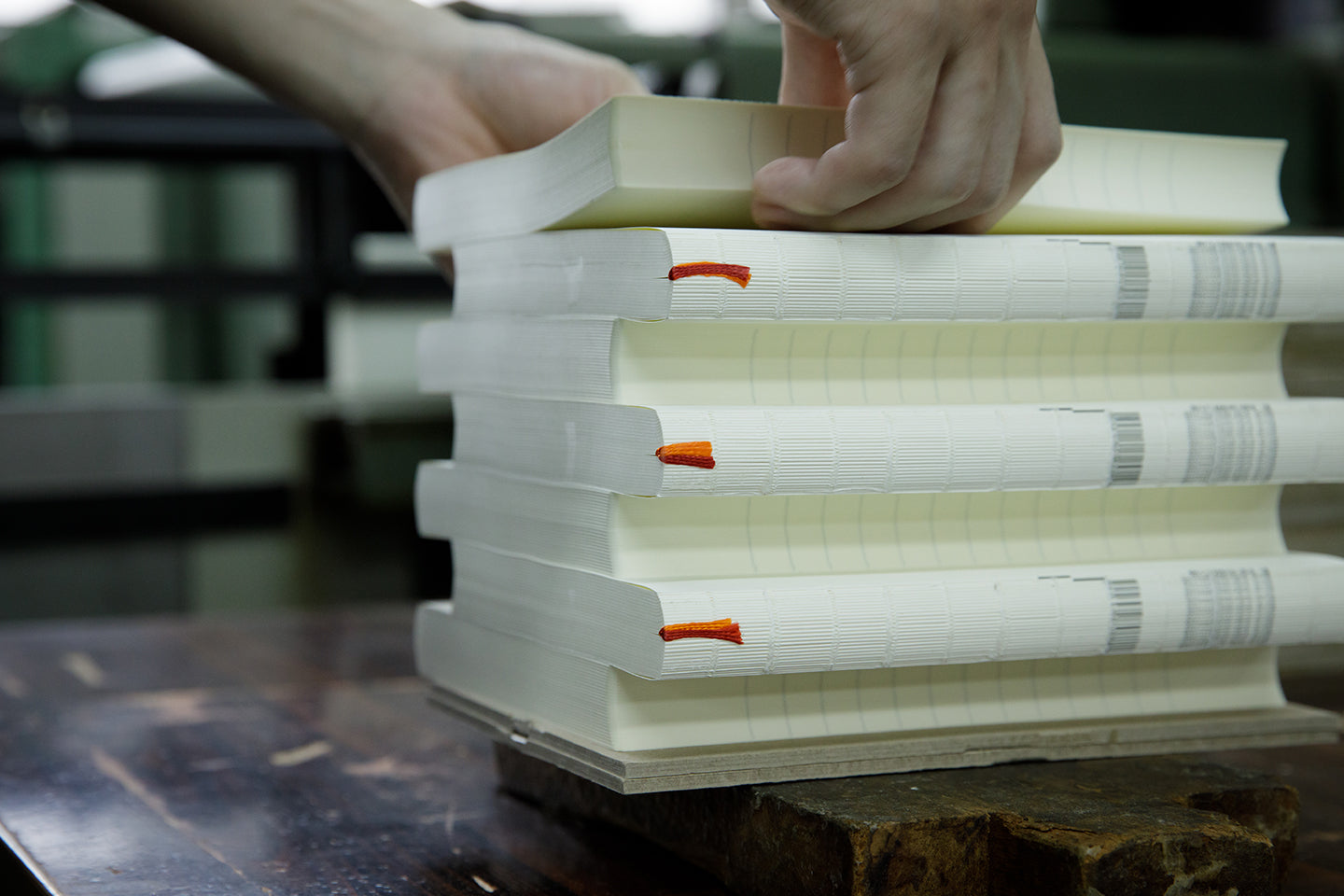
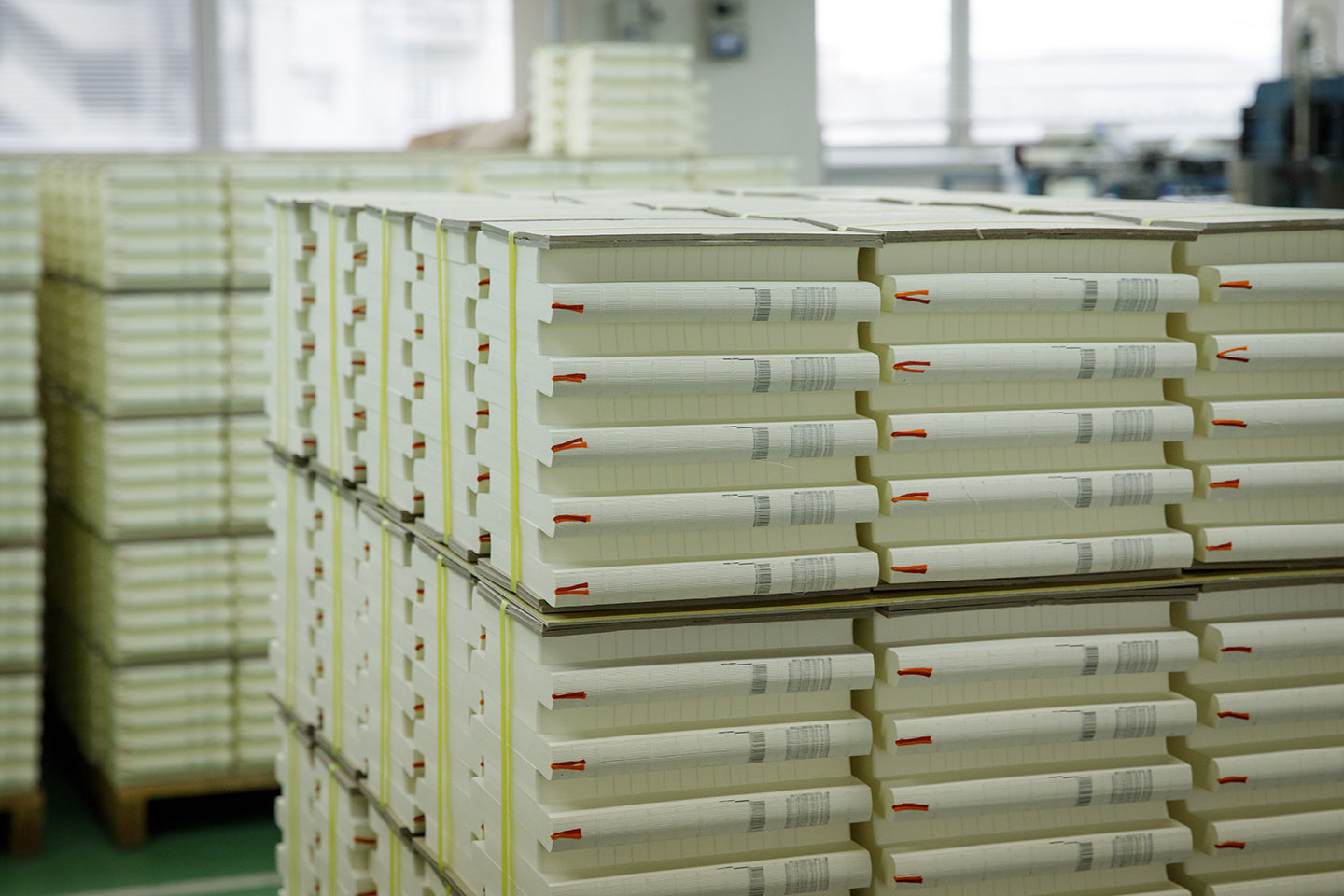
Glue is usually applied to the spine by machine. However, for the MD Notebook Diary 1 Day 1 Page, a special adhesive is used to preserve its ability to open comfortably, so this process is done by hand. Though time-consuming, this step is essential to creating a thick diary that still opens with ease.
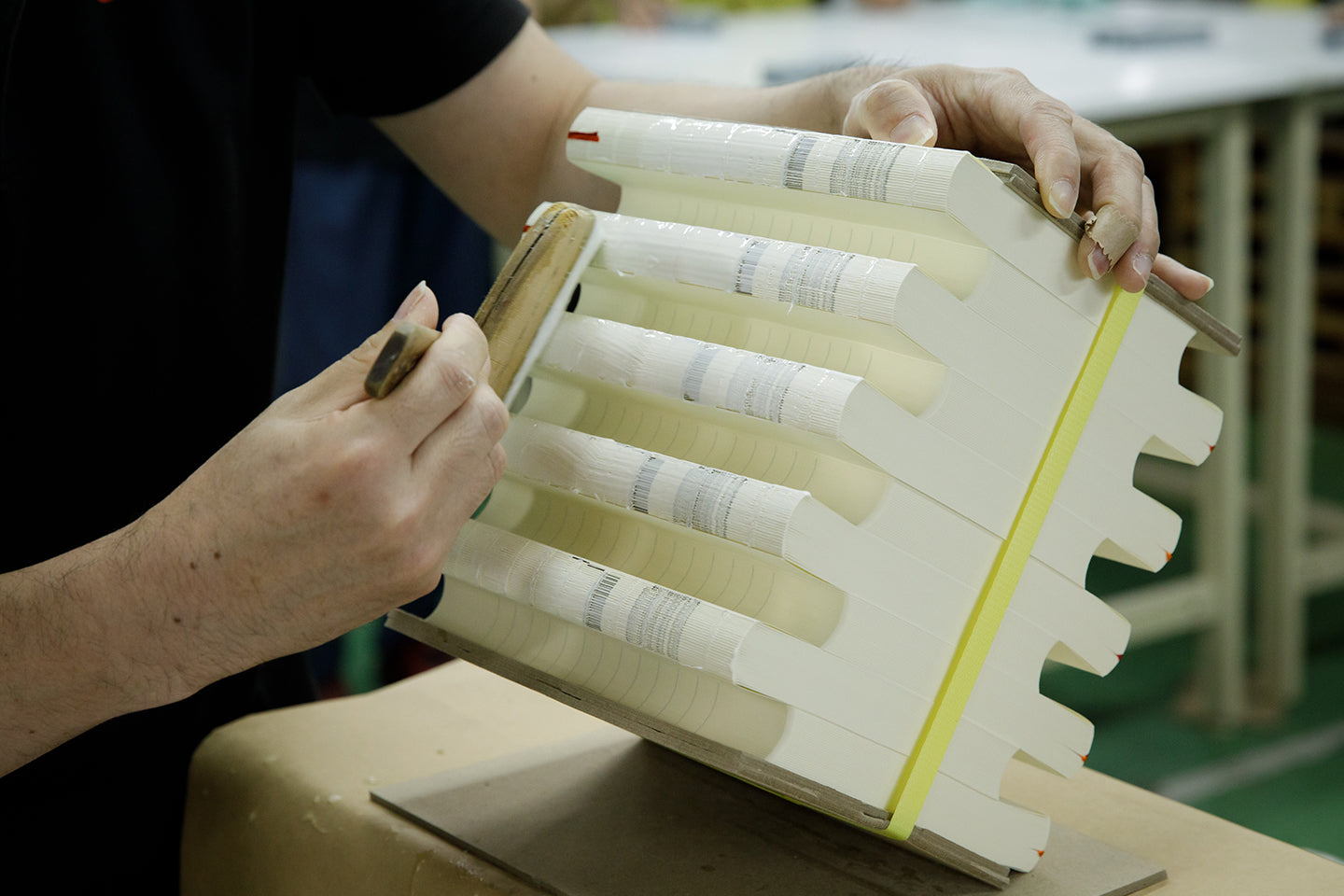
After the adhesive is applied, the cover and endpapers are attached by machine and then firmly set in place using a press.
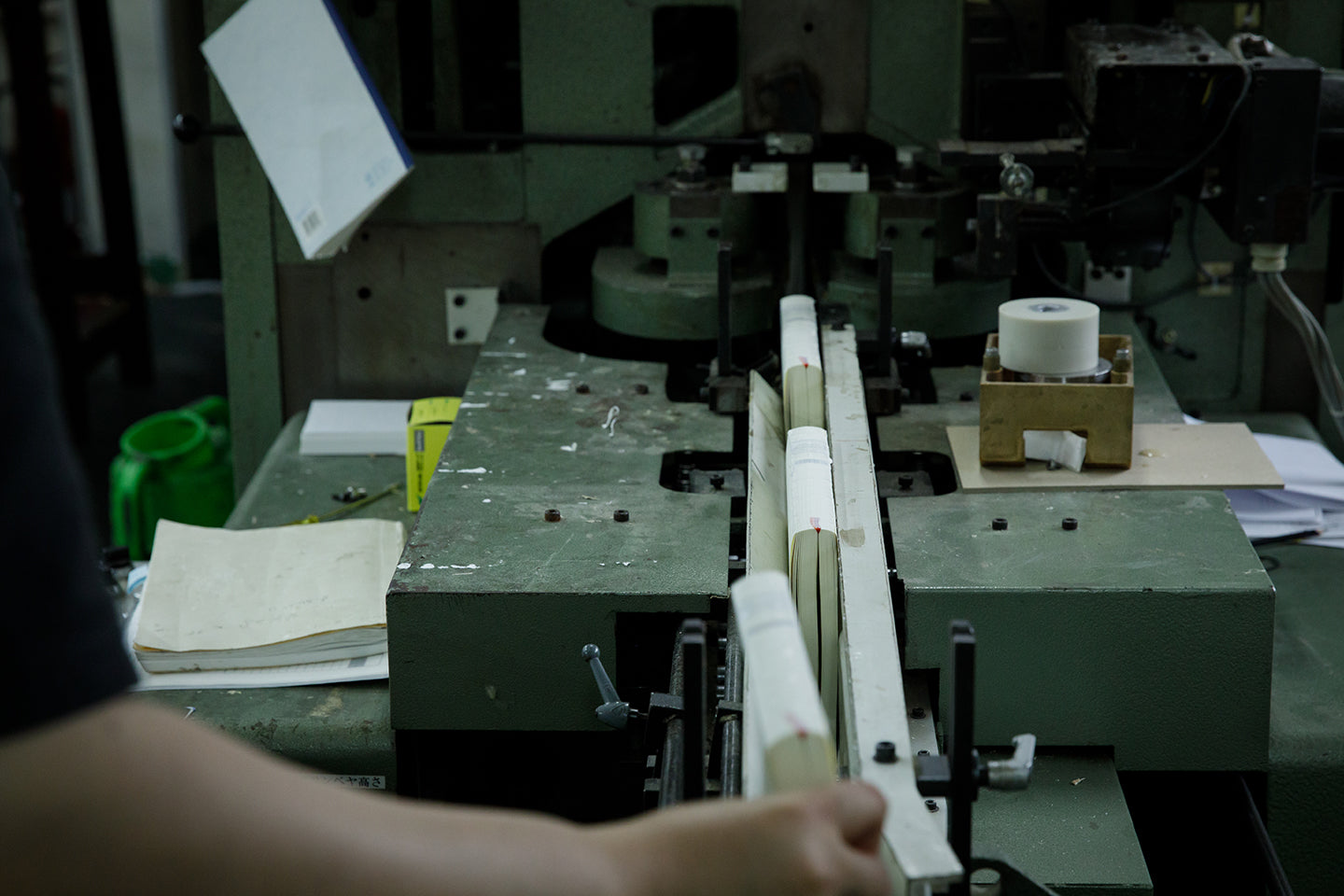
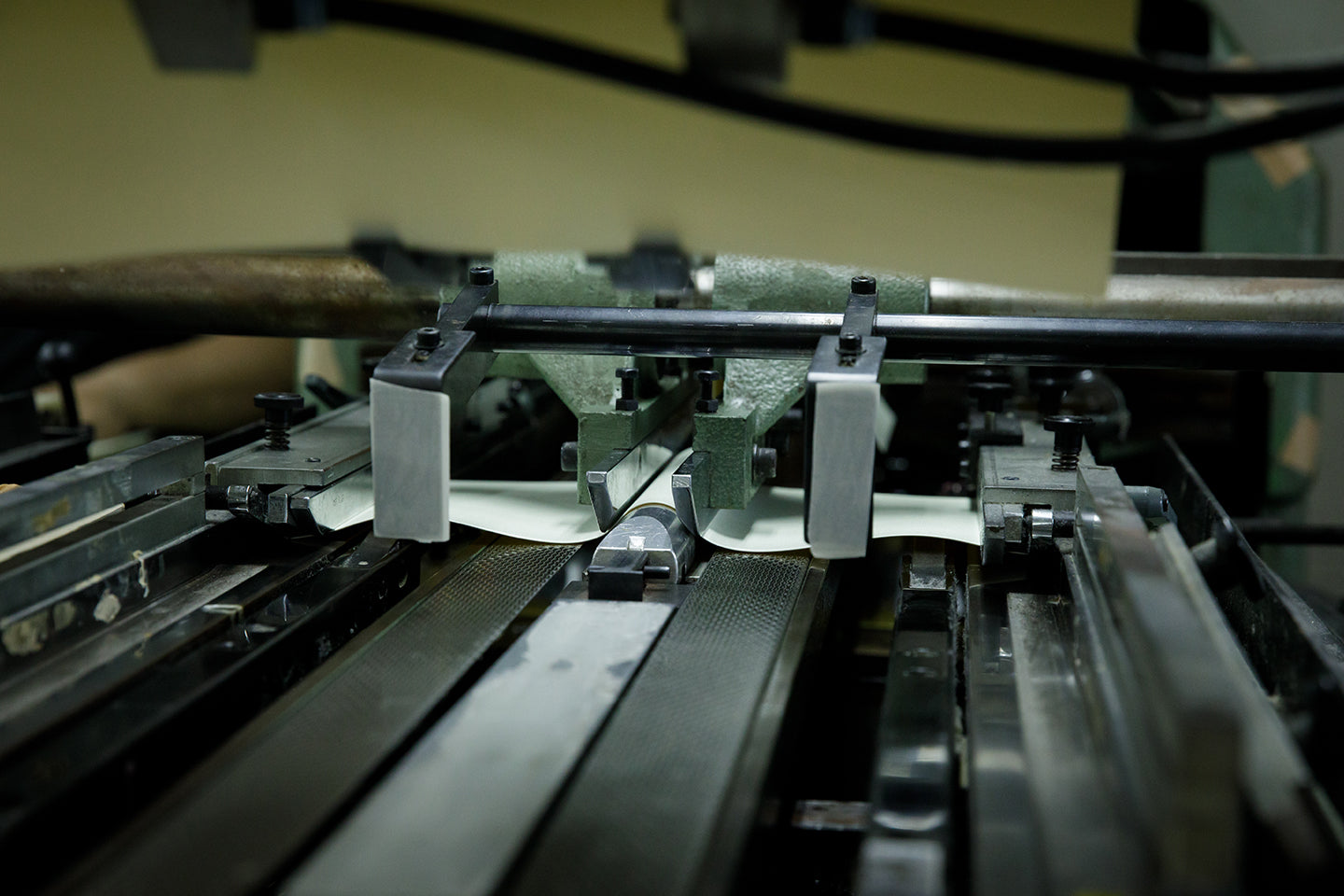
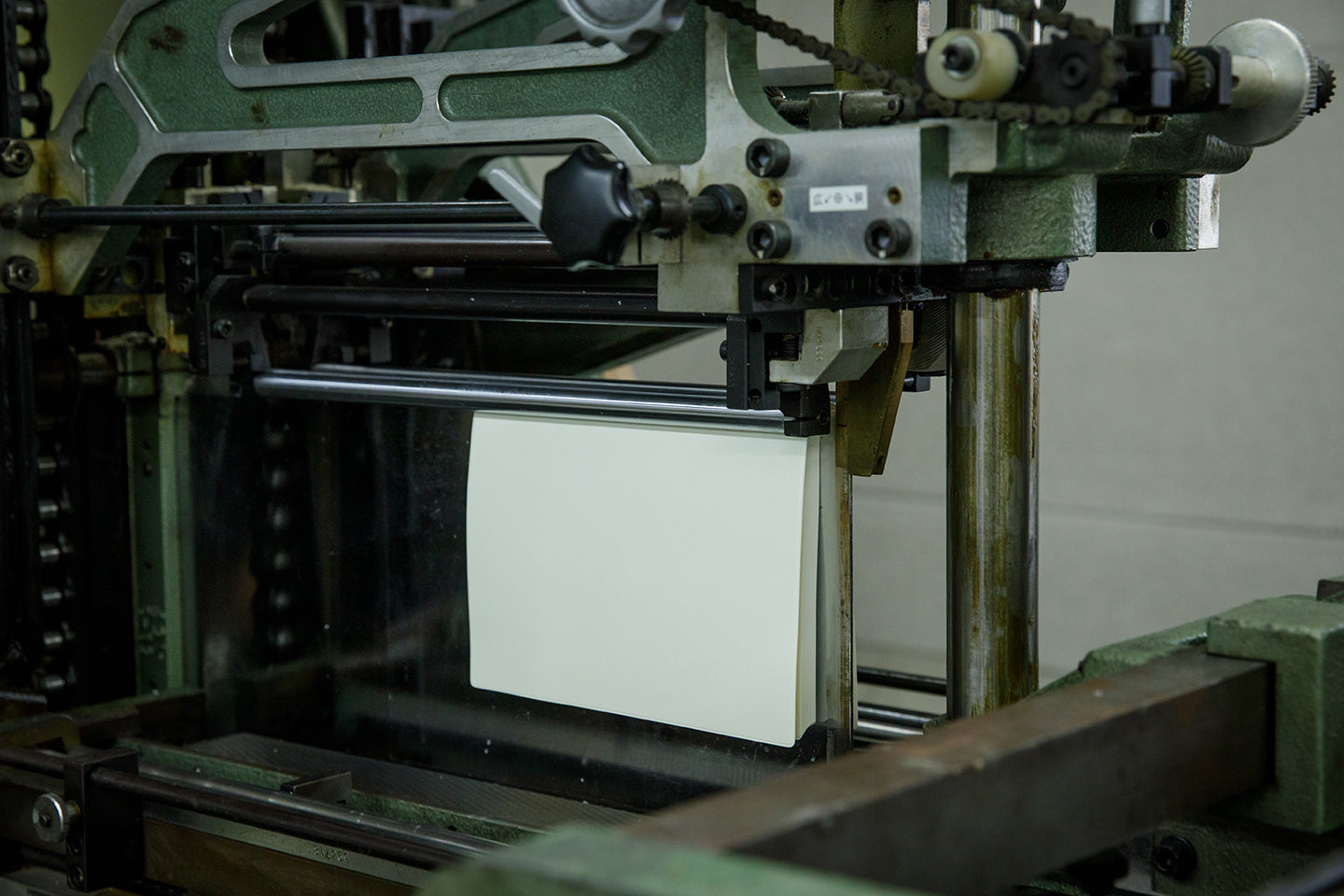
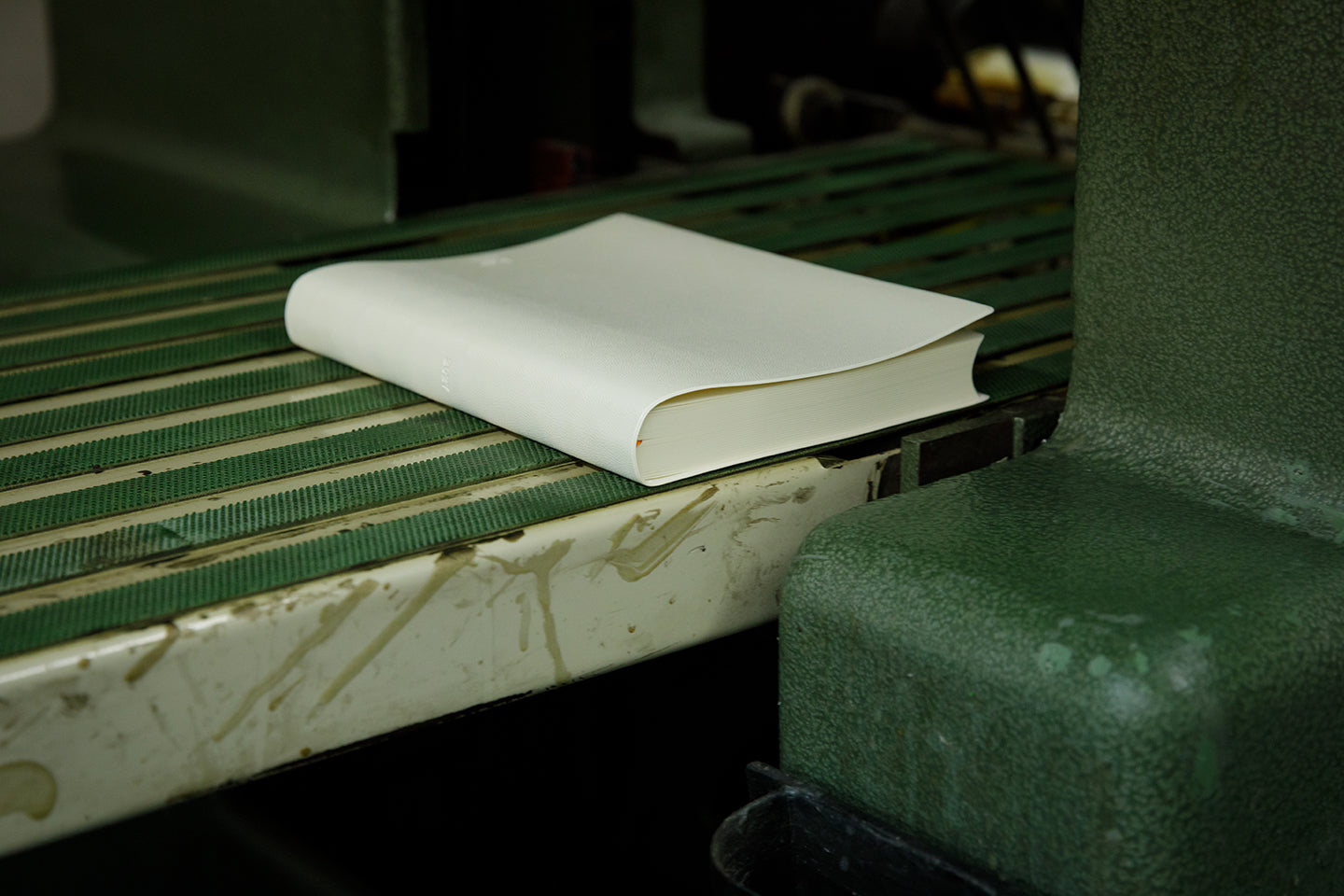
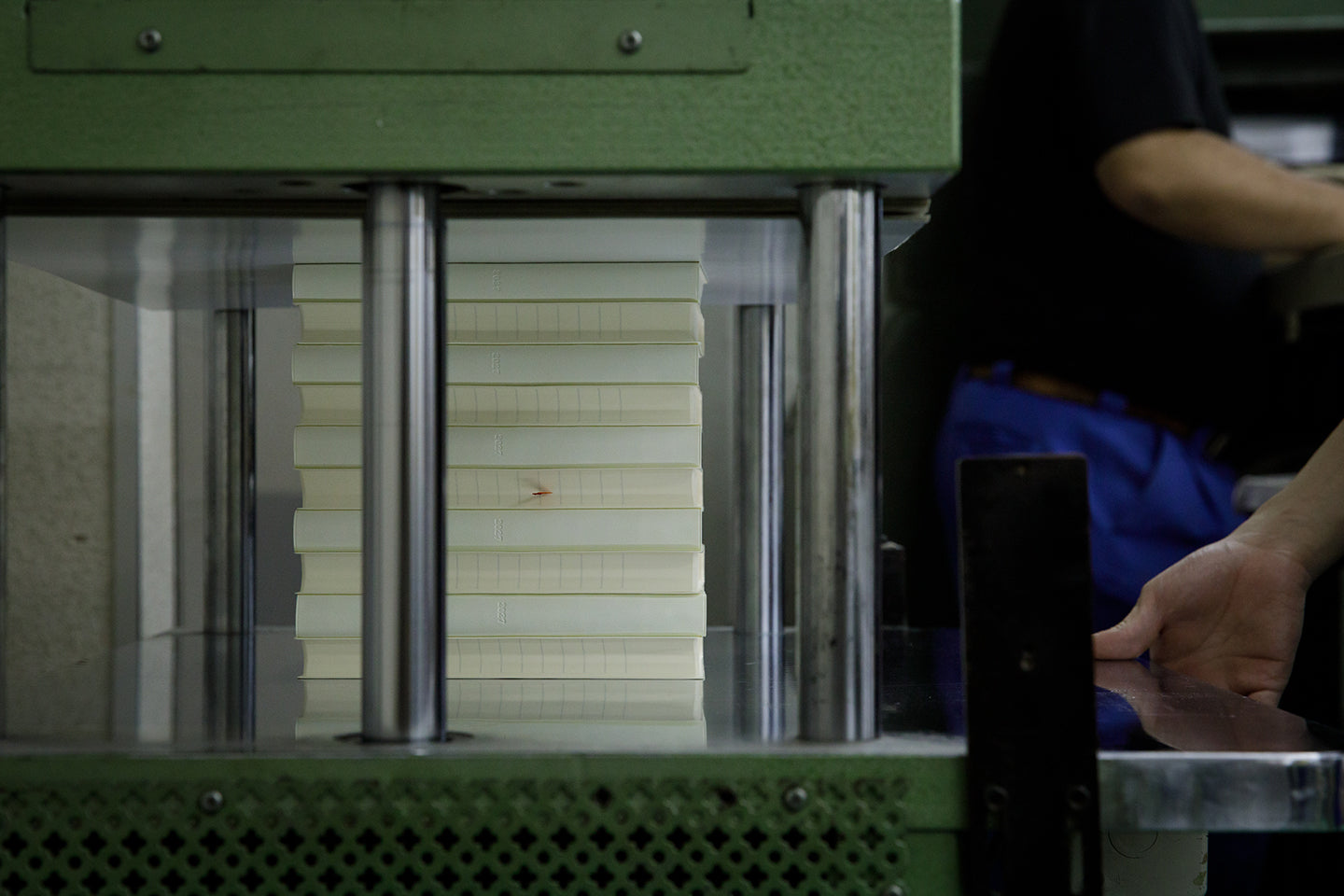
The final step is to carefully adhere the cover material to the spine. While this process is often done by machine, here, skilled craftspeople finish each diary by hand, gently smoothing the spine one by one.
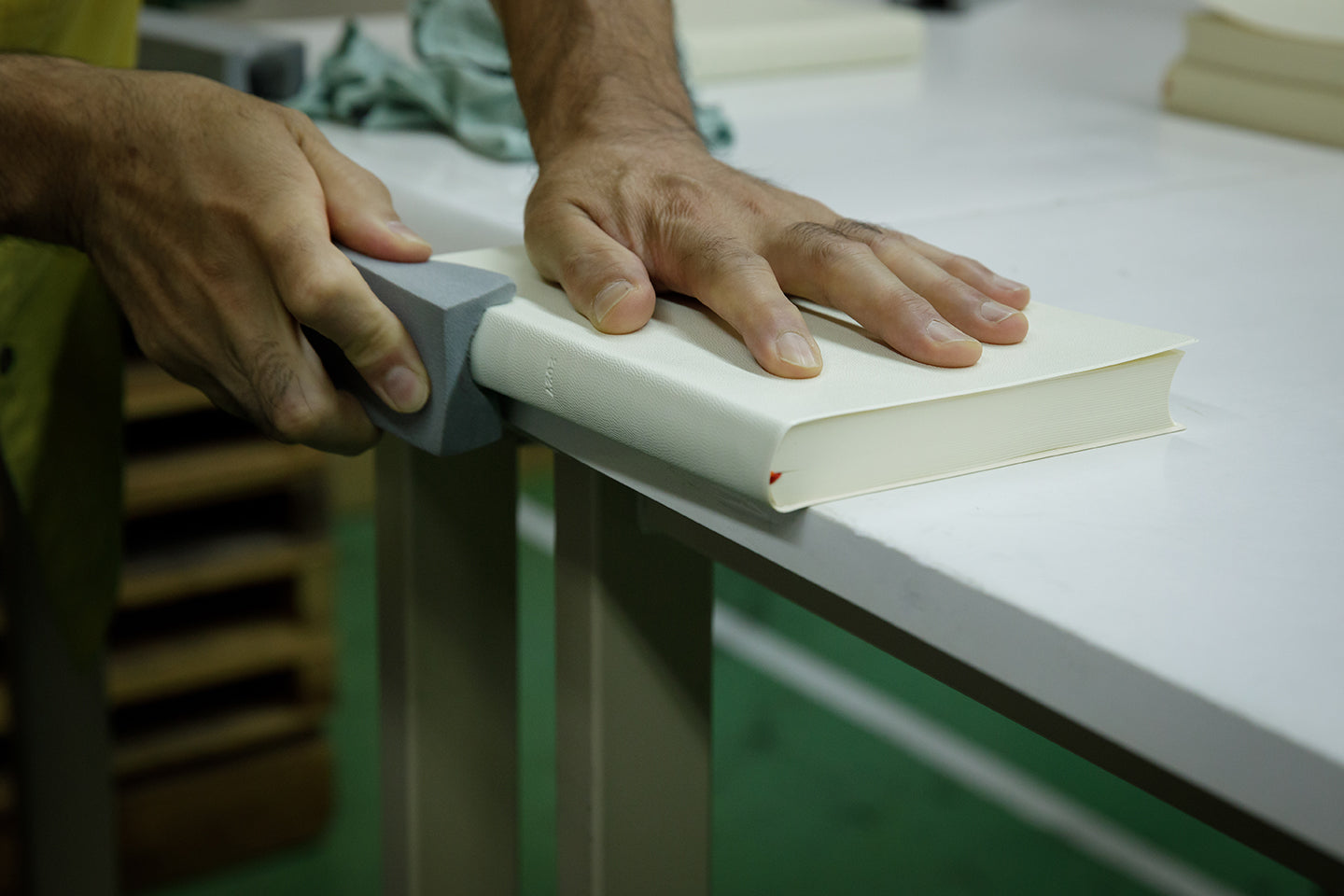
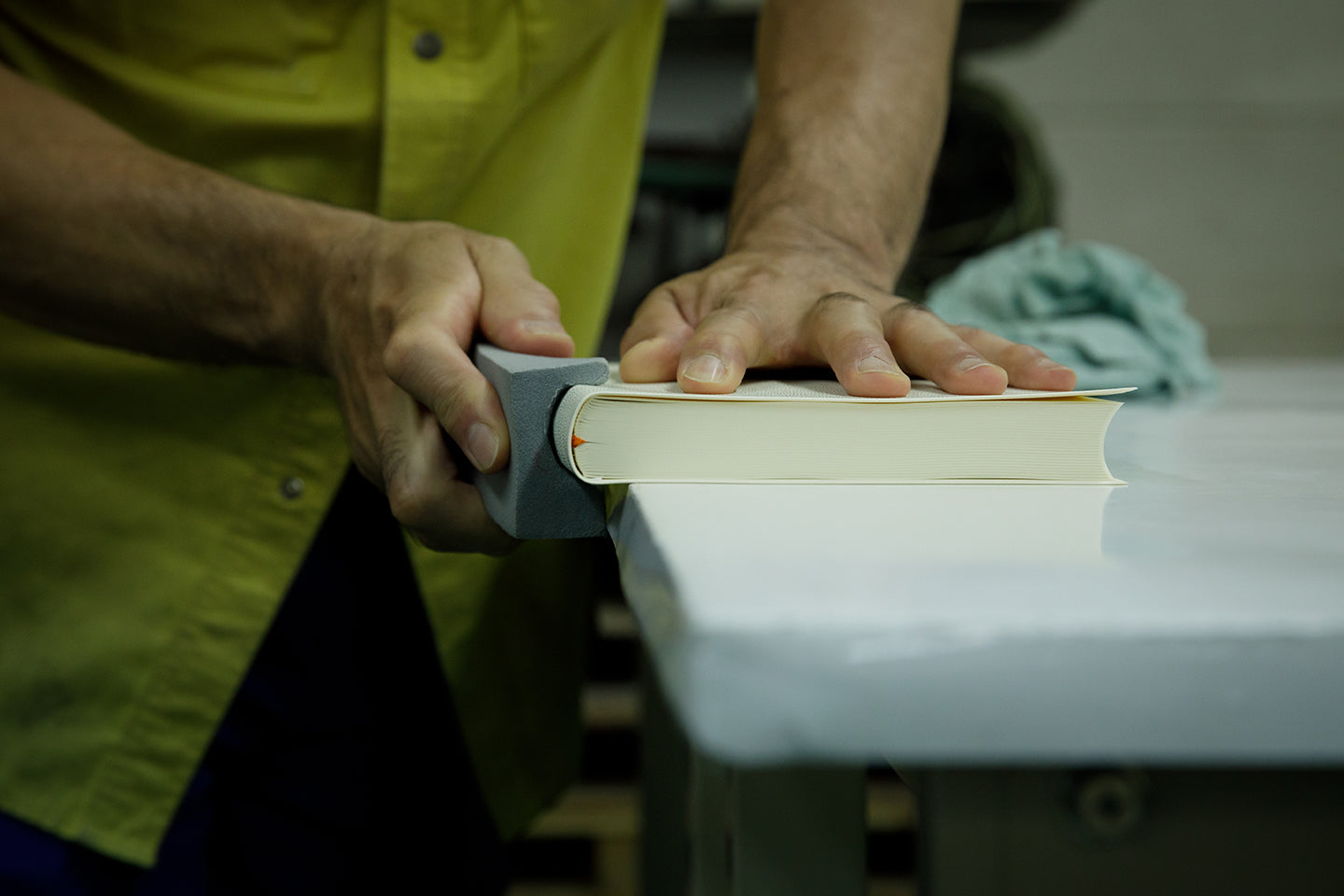
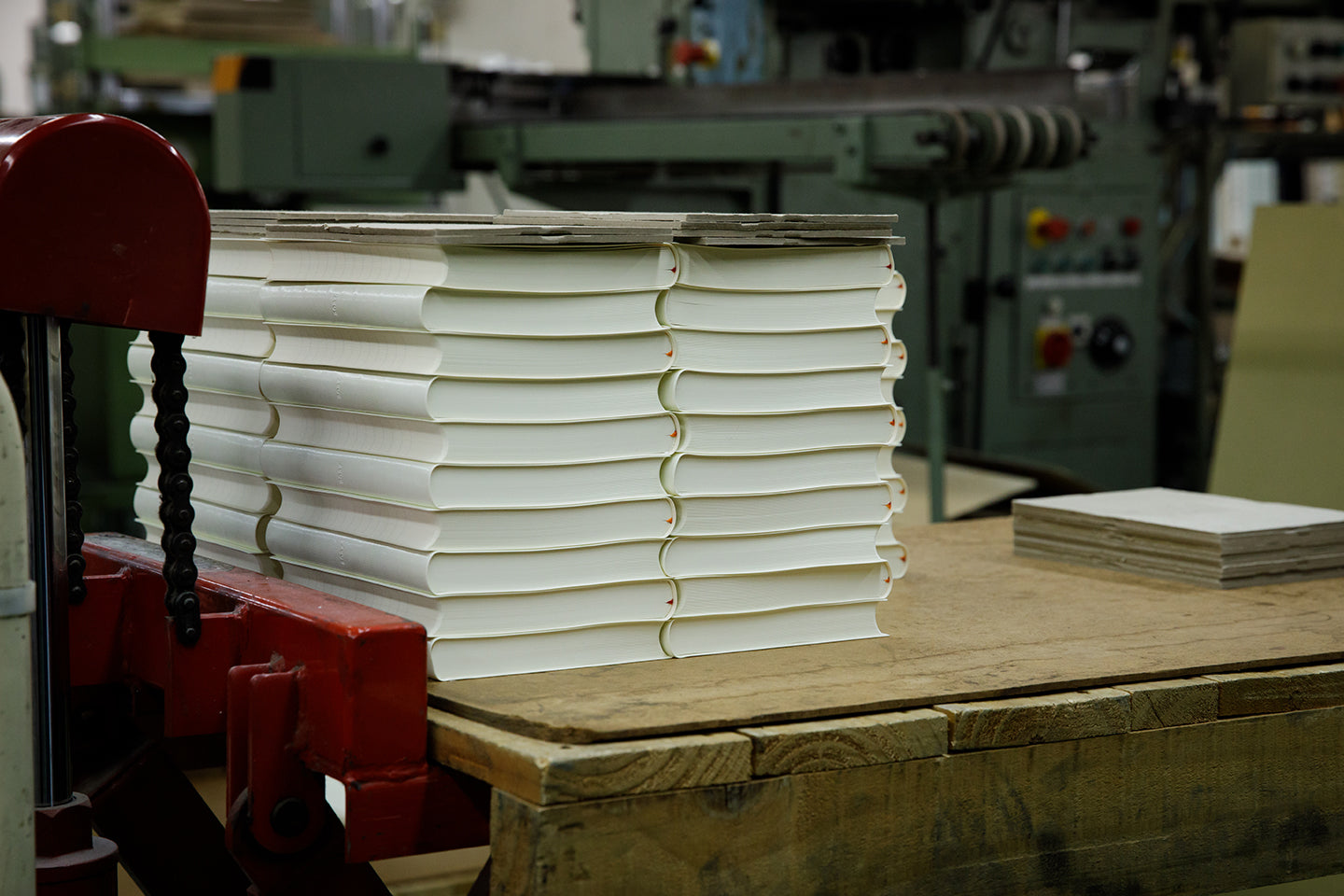
The result is a diary that is substantial yet easy to open, durable, and made to last. Even as many stages of bookbinding have become automated, this diary still relies on the careful work of human eyes and hands. Each step contributes to the quality that supports all 365 days.


