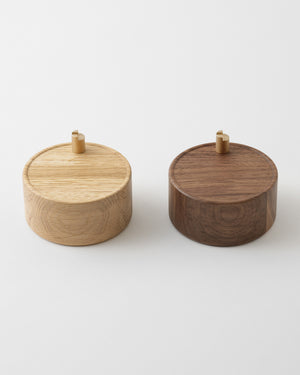
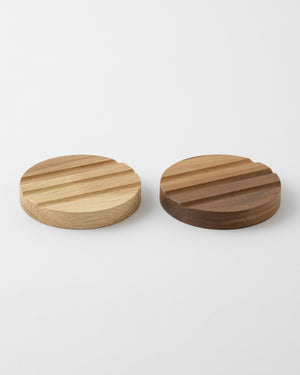
MD Scent Clock Wood / MD Pen Rest Wood

Paper begins with trees.
Perhaps that is why objects made from wood share something in common with the MD Notebook: the warmth of the material itself, its unadorned beauty, and the way it becomes more familiar with use and develops a richer character over time.
From this shared sensibility, we created the MD Scent Clock and MD Pen Rest together with Karimoku Furniture, a Japanese maker of wooden furniture. Their commitment to working thoughtfully with wood, carefully crafting every detail, and pursuing comfort and quality closely aligns with the craftsmanship MD PRODUCT values.
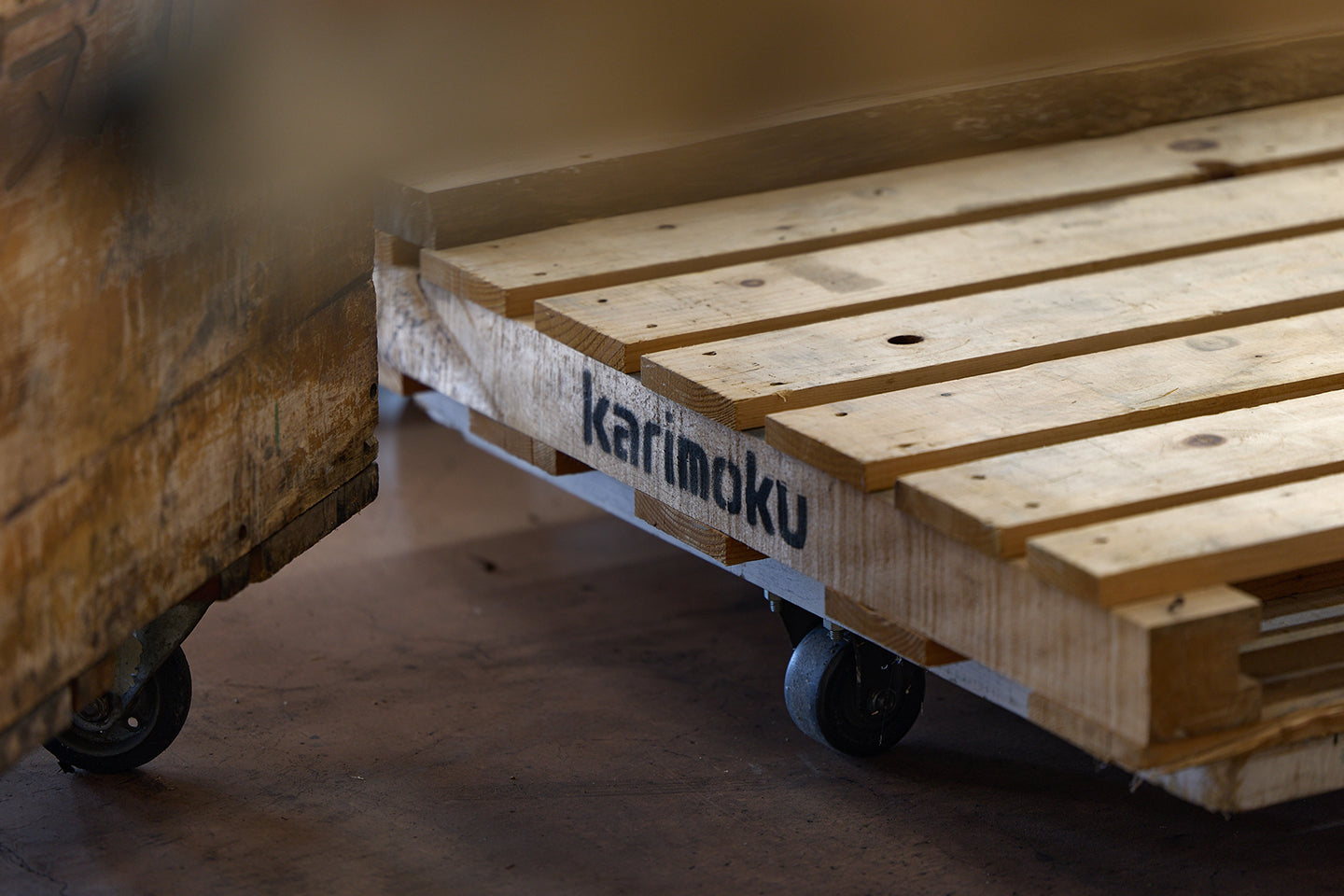
Wood sourced from various regions is carefully inspected, piece by piece, upon arrival. It then undergoes both natural and kiln drying, a gradual process that slowly reduces the moisture content of the wood.
The oak used for the MD Scent Clock and MD Pen Rest has a moisture content of approximately 70% when it arrives. It is air-dried outdoors for about six months, reducing its moisture content to 20–30%. It then undergoes kiln drying until the moisture content reaches approximately 7%, creating a stable material that is less likely to change after processing.
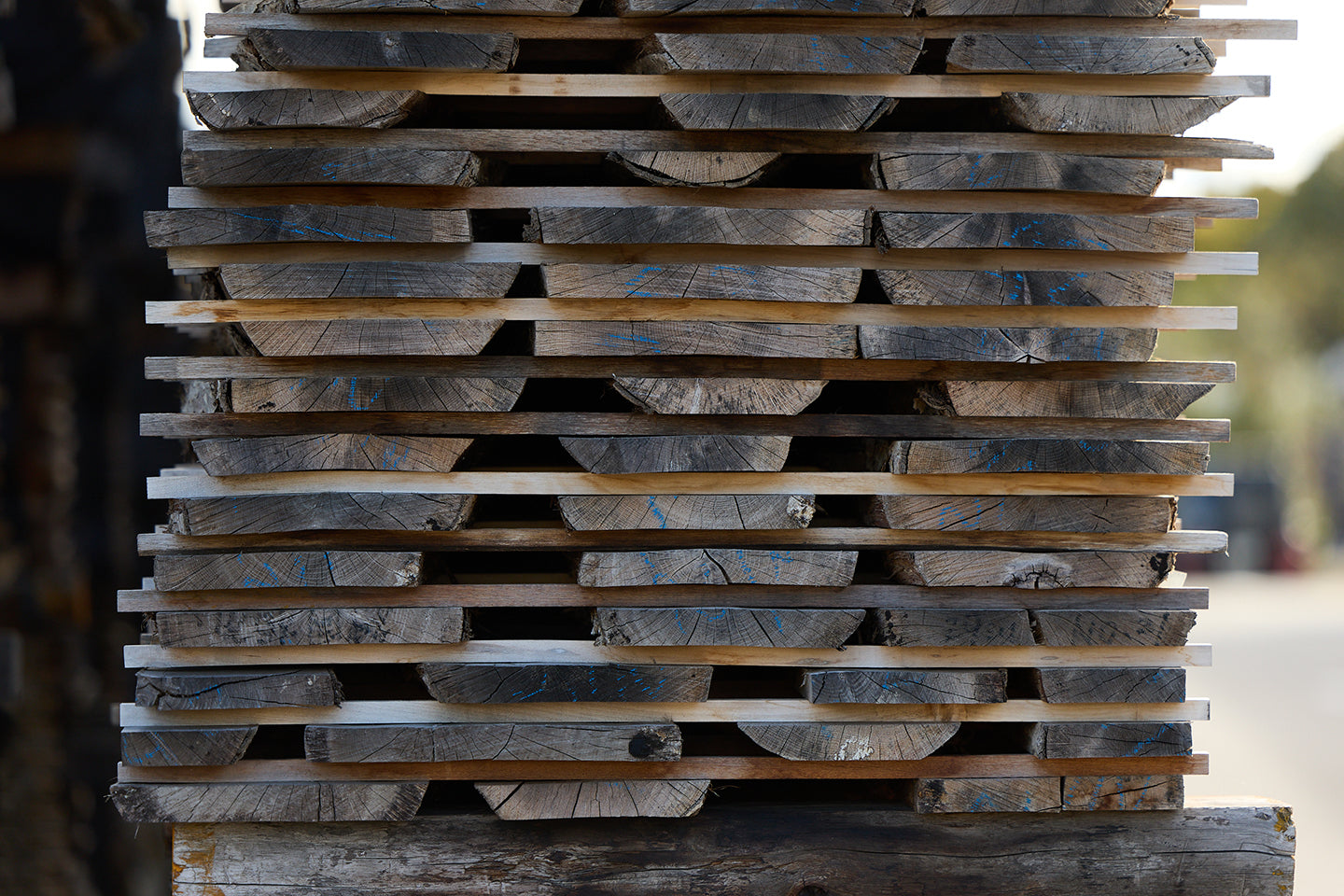
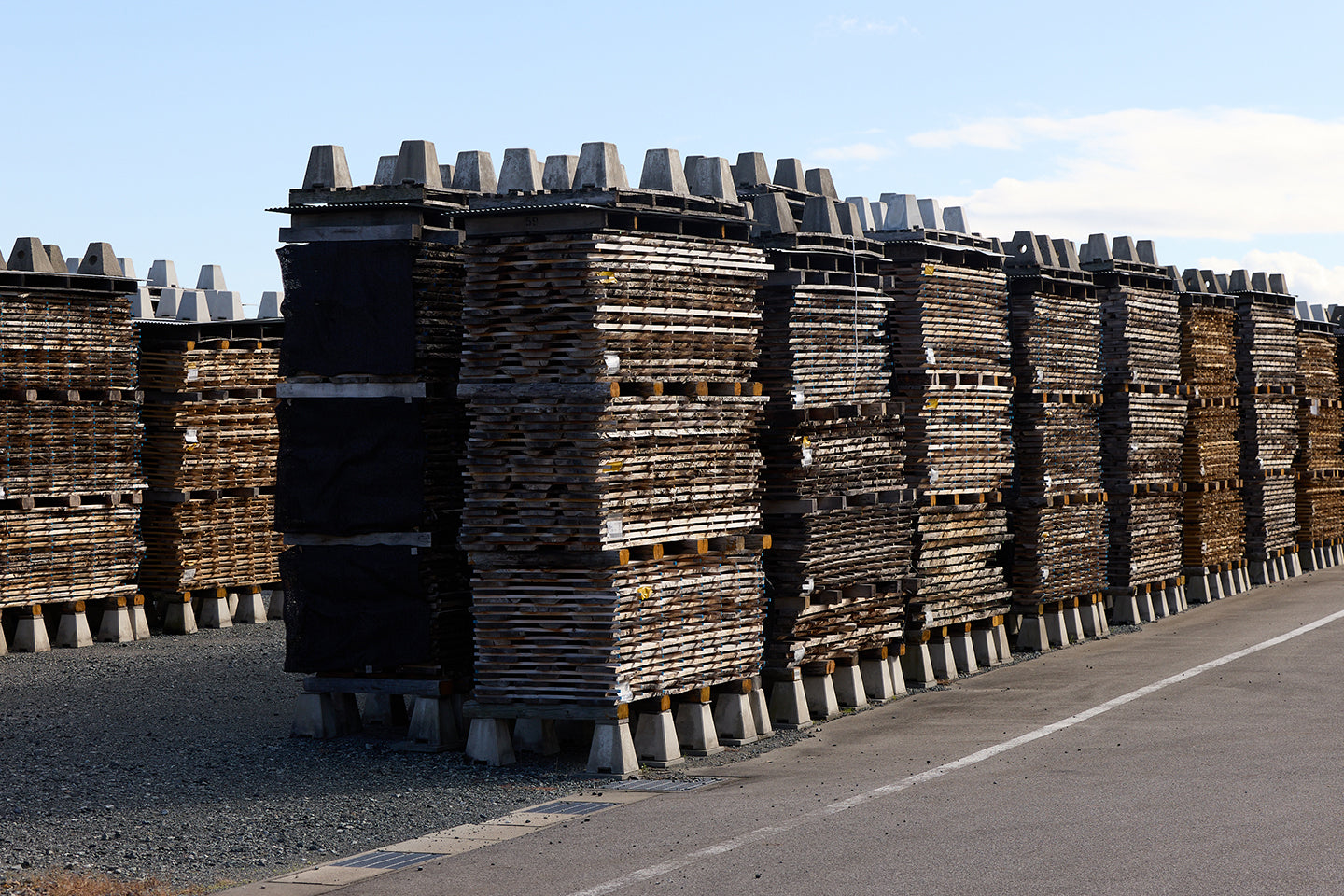
After drying, the wood is prepared and allowed to rest further.
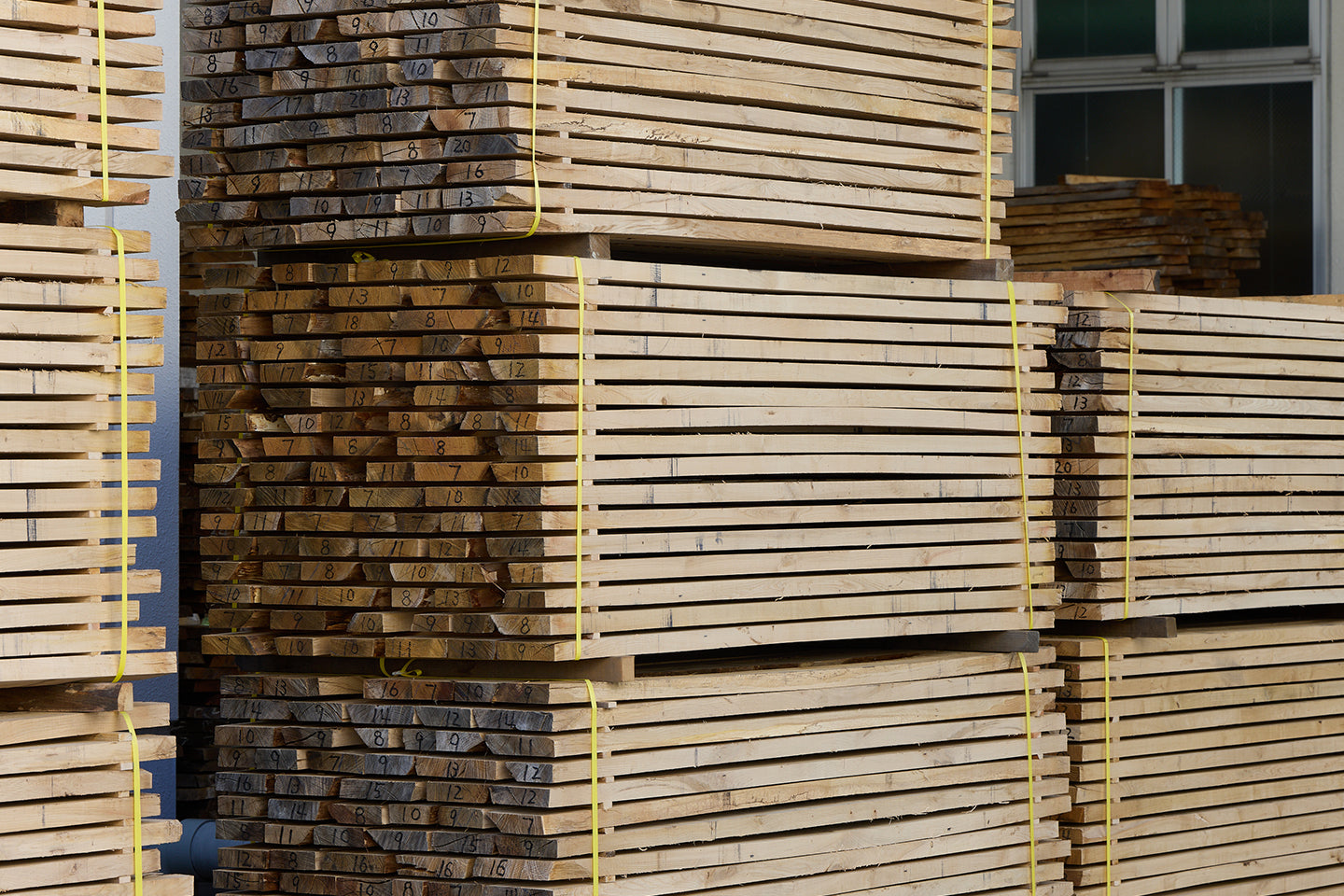
The wood is cut into smaller pieces and prepared for shaping. Oak is shown on the left, and walnut on the right.
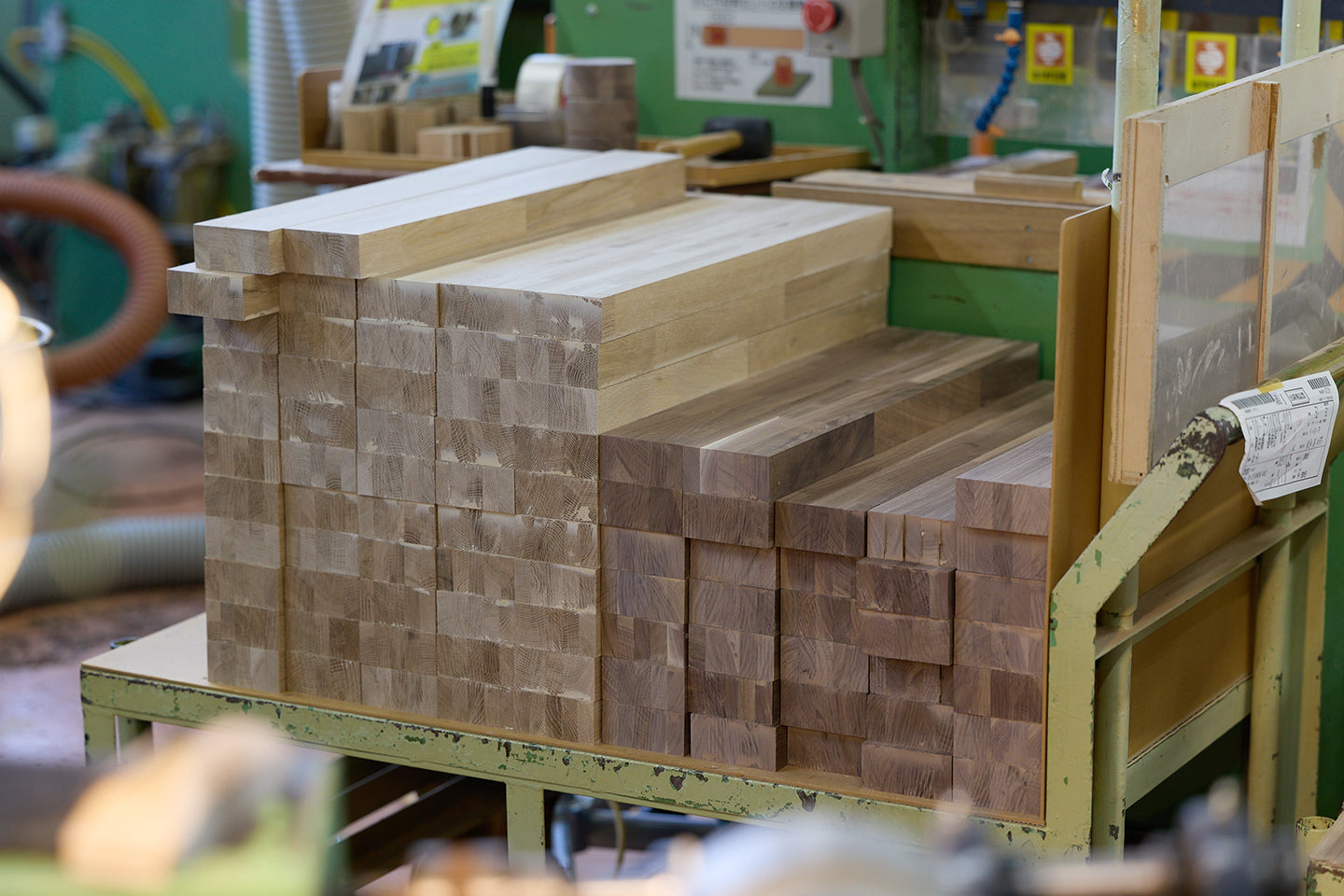
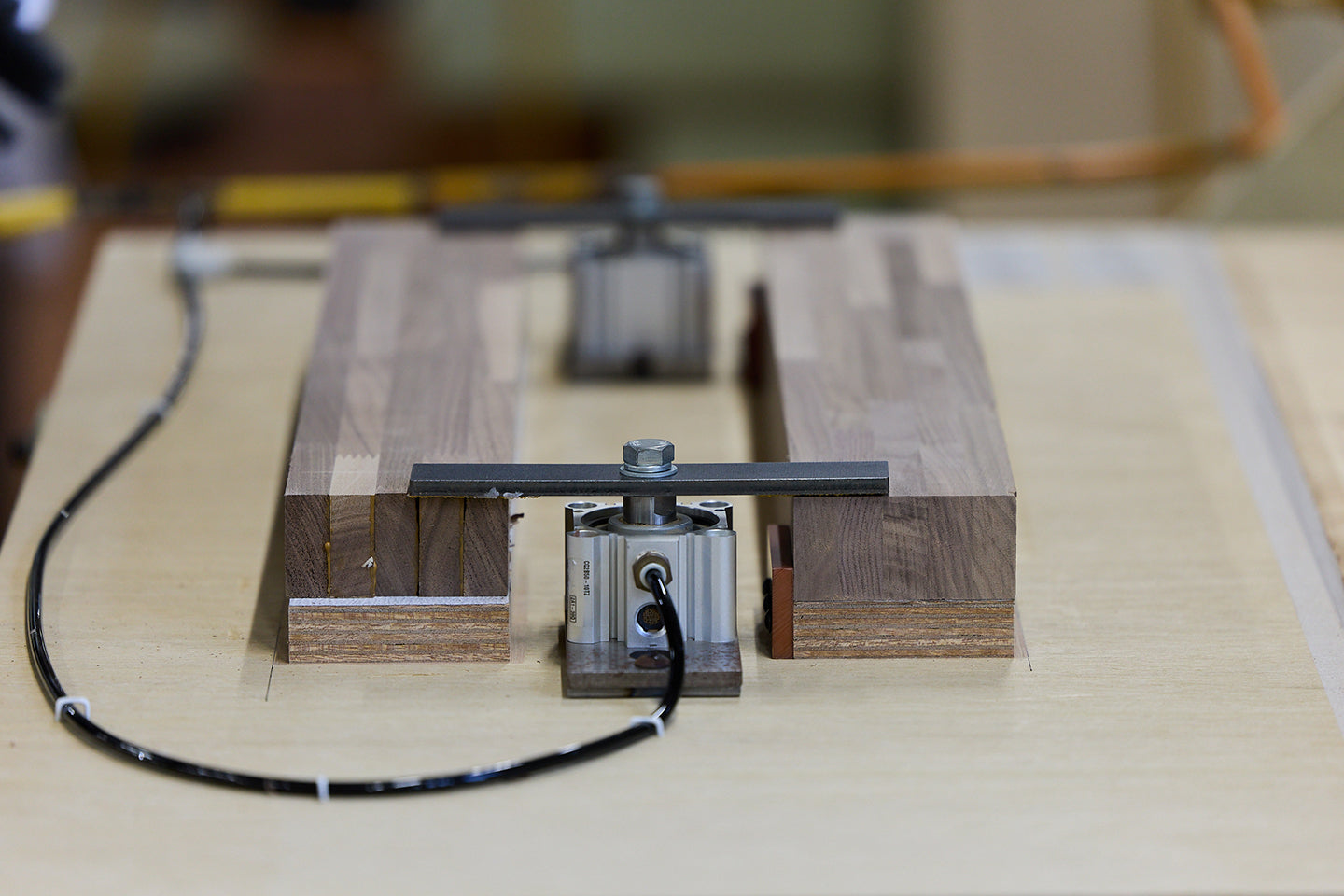
Each piece is secured and shaped by machine. Because the incense holder of the MD Scent Clock is relatively thick, it is carefully carved from one side at a time.
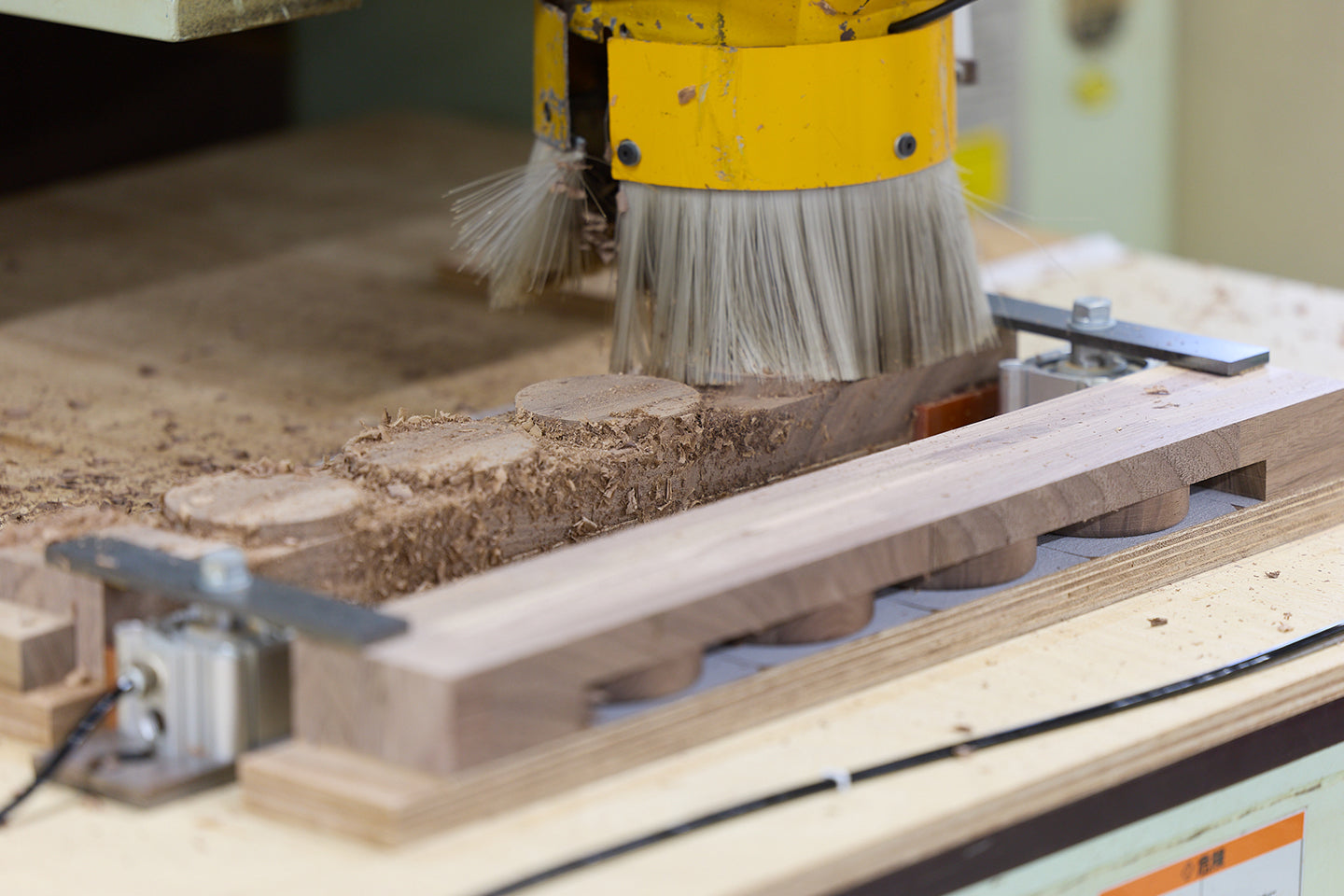
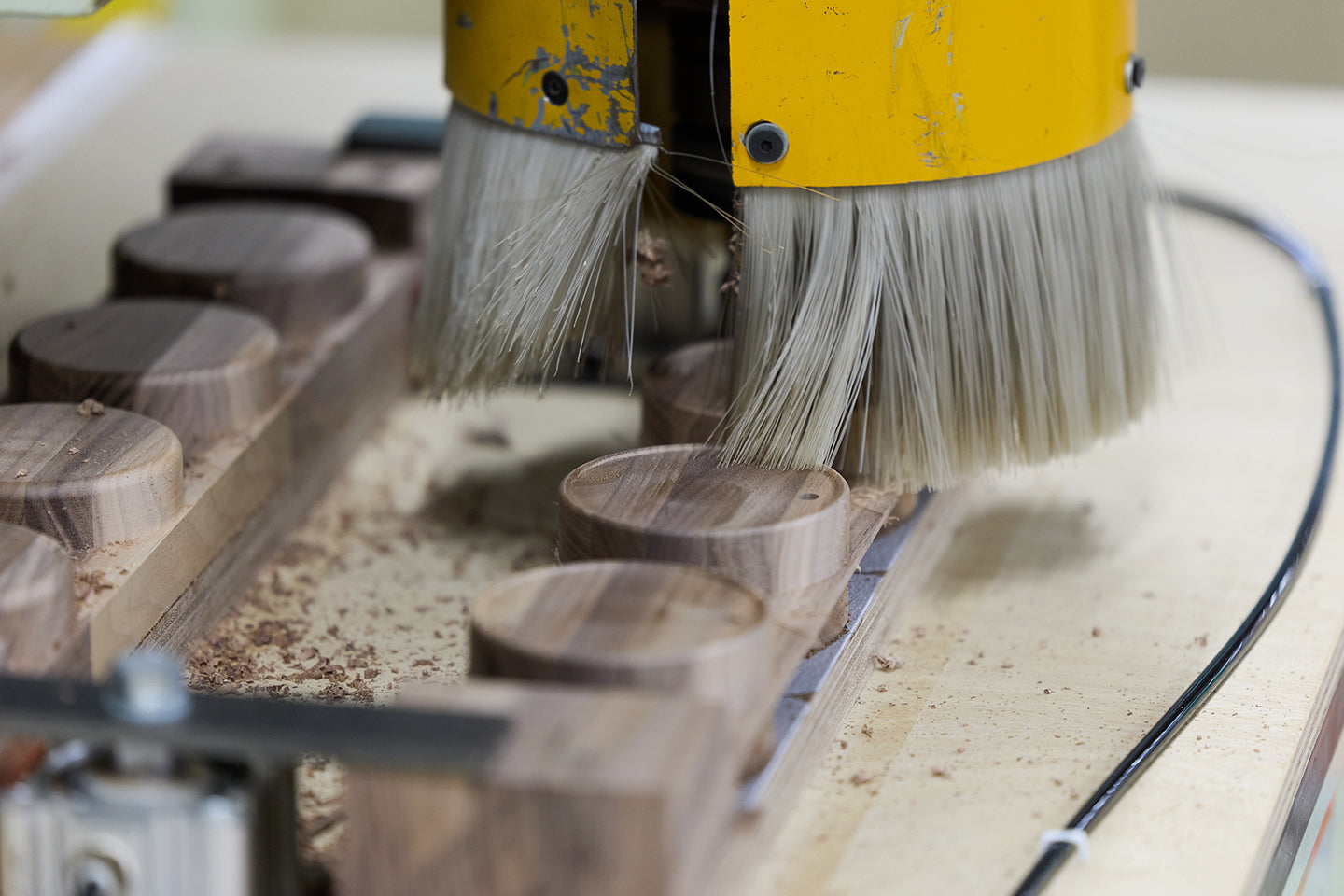
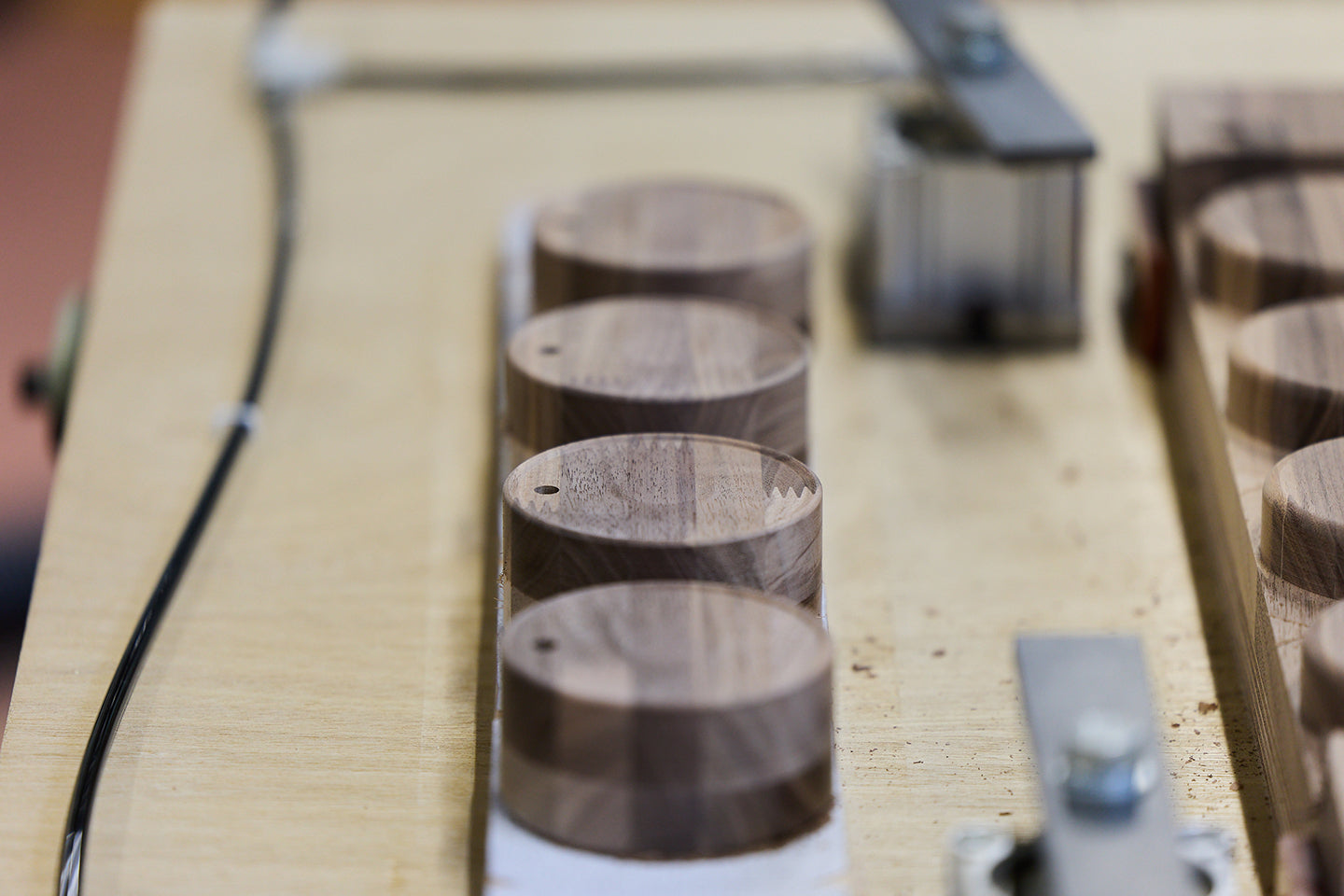
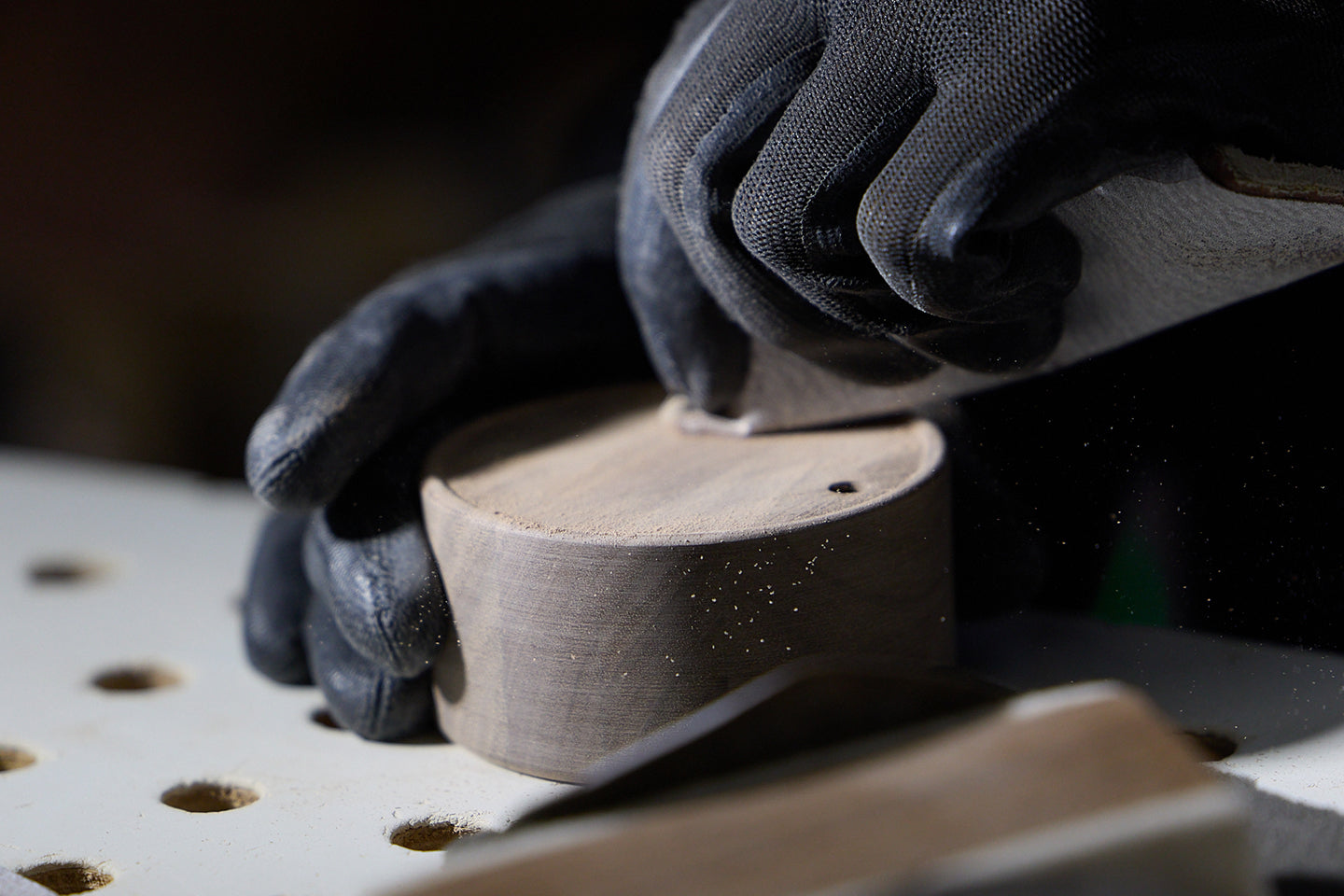
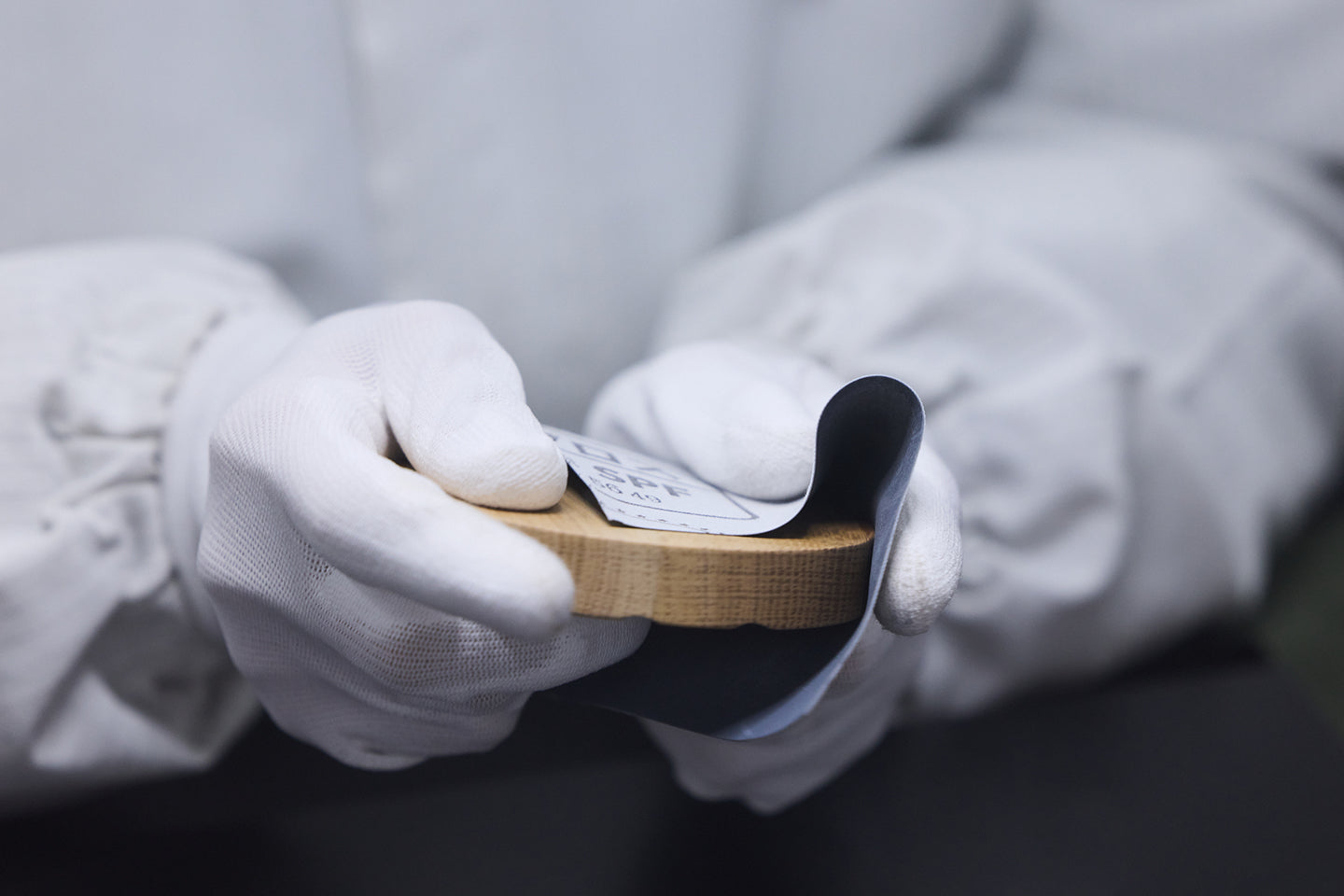
After machining, each piece is finished by hand. Edges and machining marks are carefully refined for a smooth, comfortable feel.
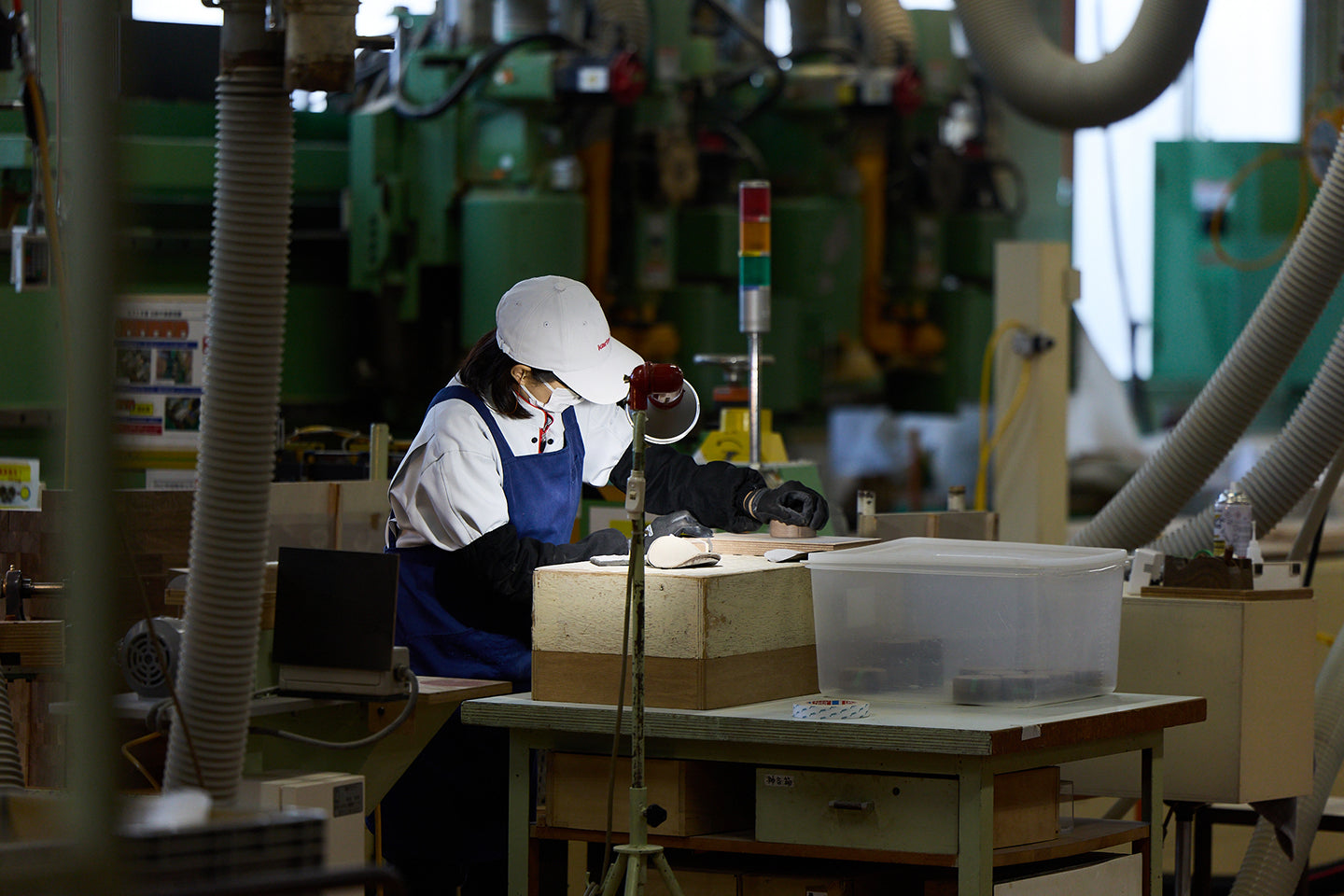
Next comes the finishing process.
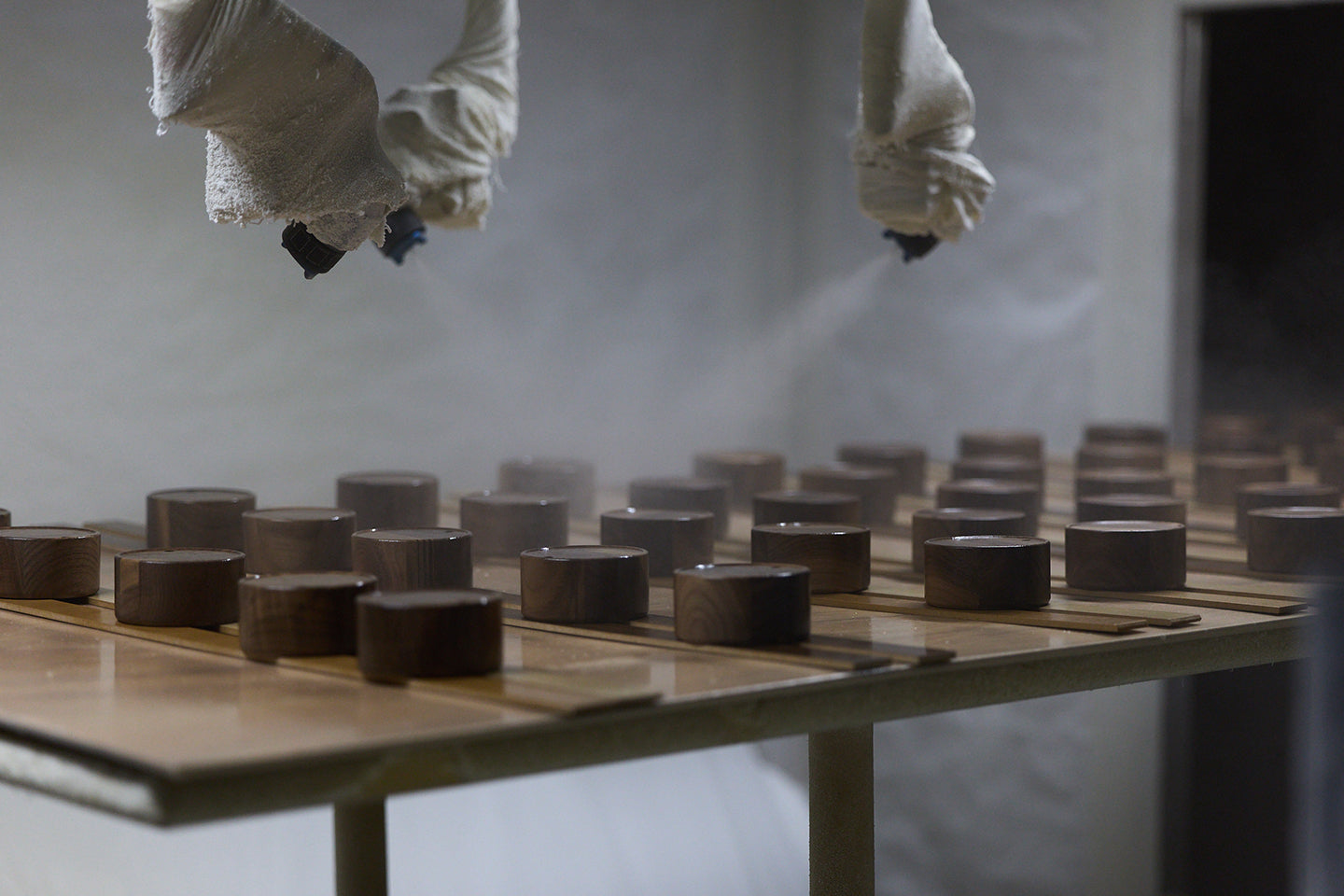
A finish approximately 0.5 microns thick is applied to the surface, helping the wood withstand changes in humidity and ensuring lasting use.
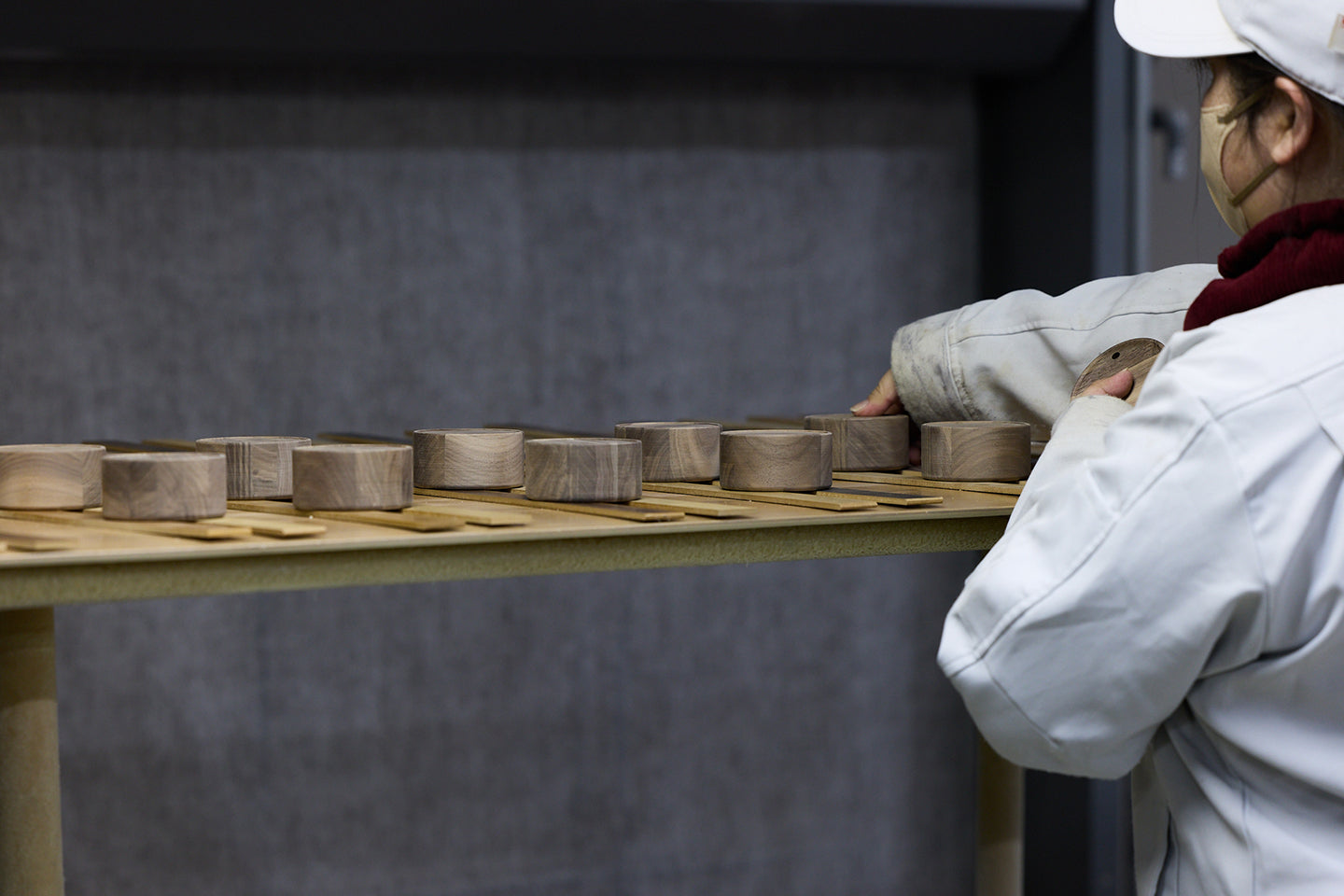
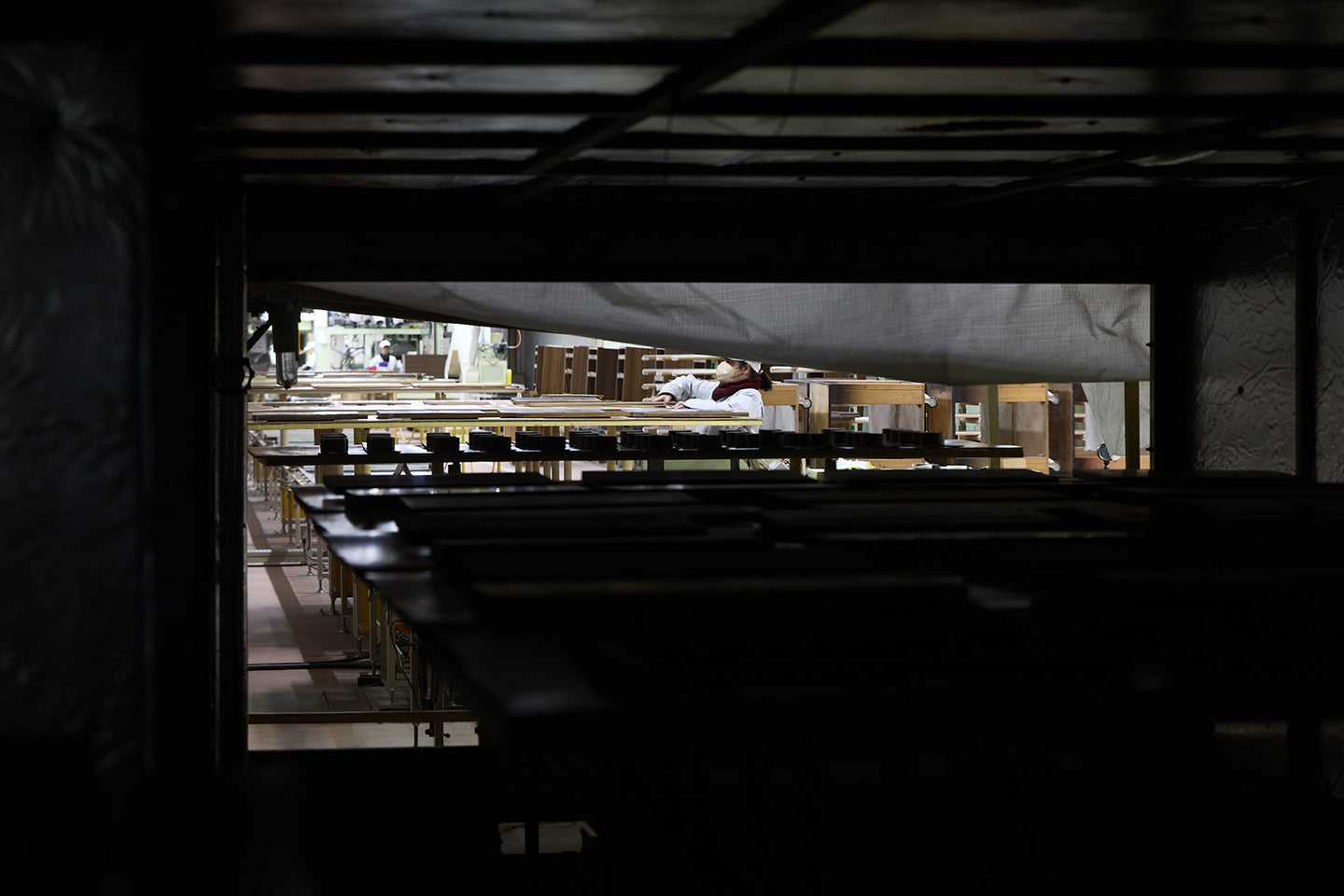
The finish is applied in three stages. Each piece moves slowly along a long production line as the first coat is applied and dries in transit. A second coat follows, and the third and final coat is applied by hand.
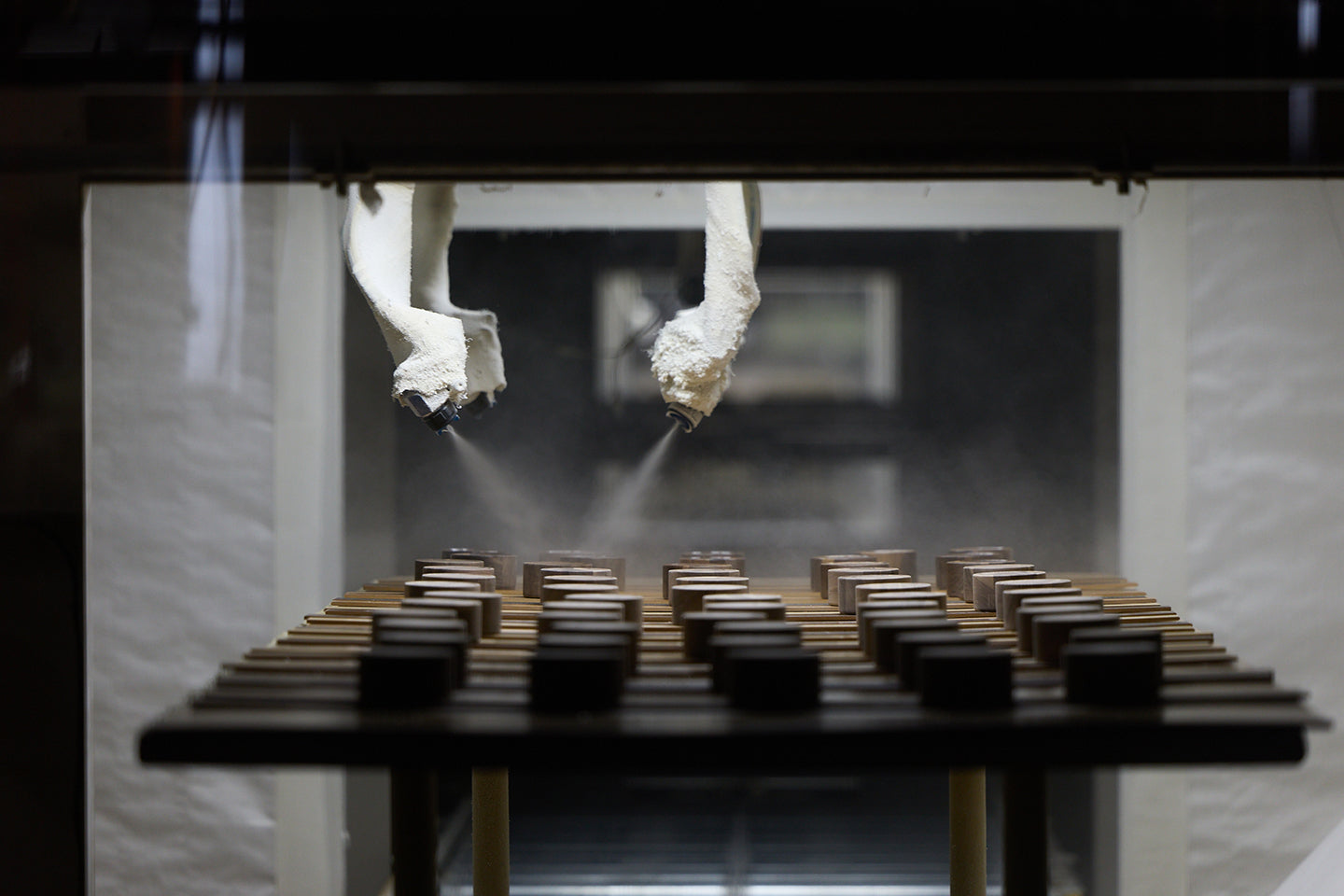
The finished pieces then undergo inspection.
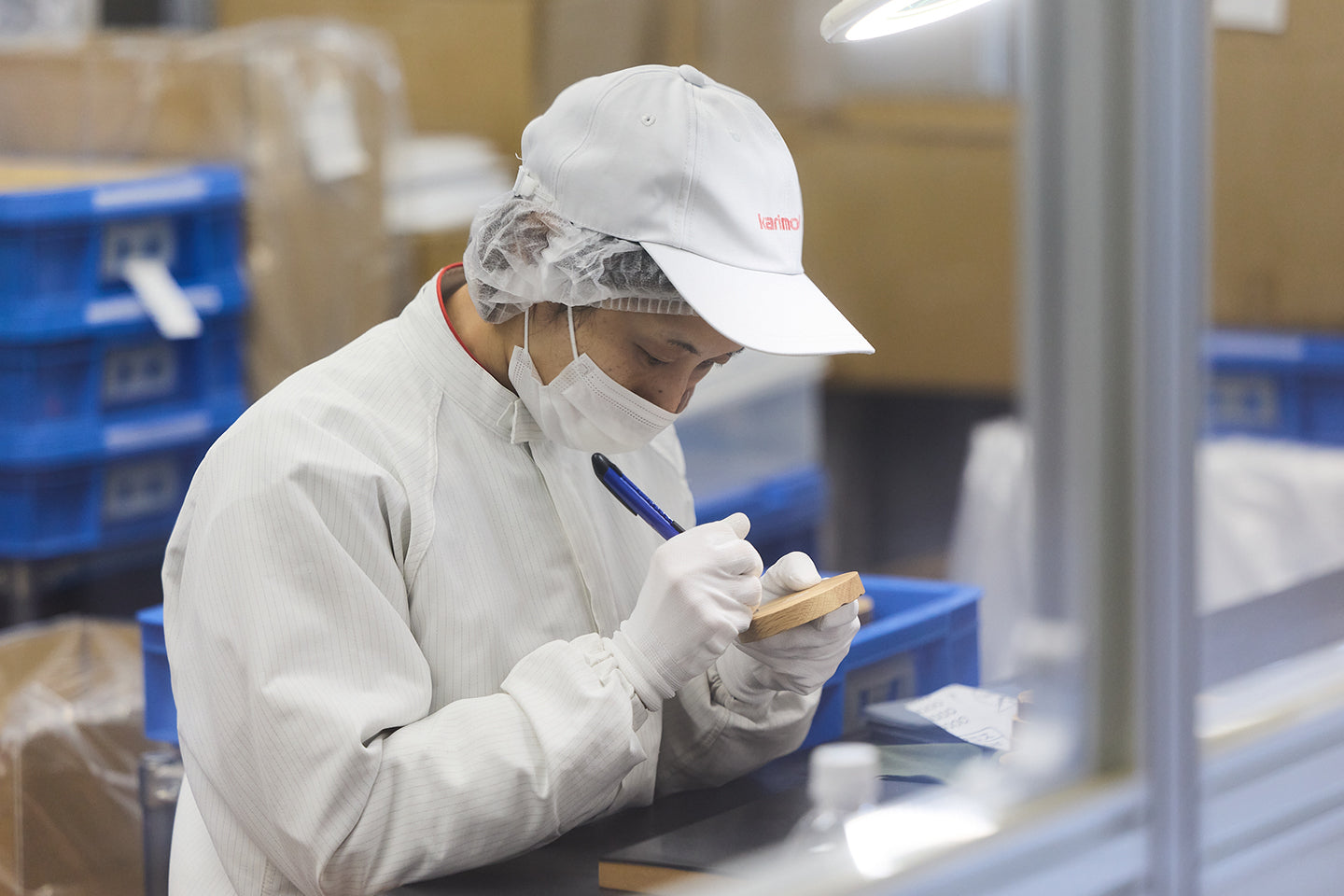
In addition to a range of quality checks, each surface is examined by hand and eye. Fine dust and debris are carefully removed, and every piece is checked individually for unevenness or imperfections in the finish.
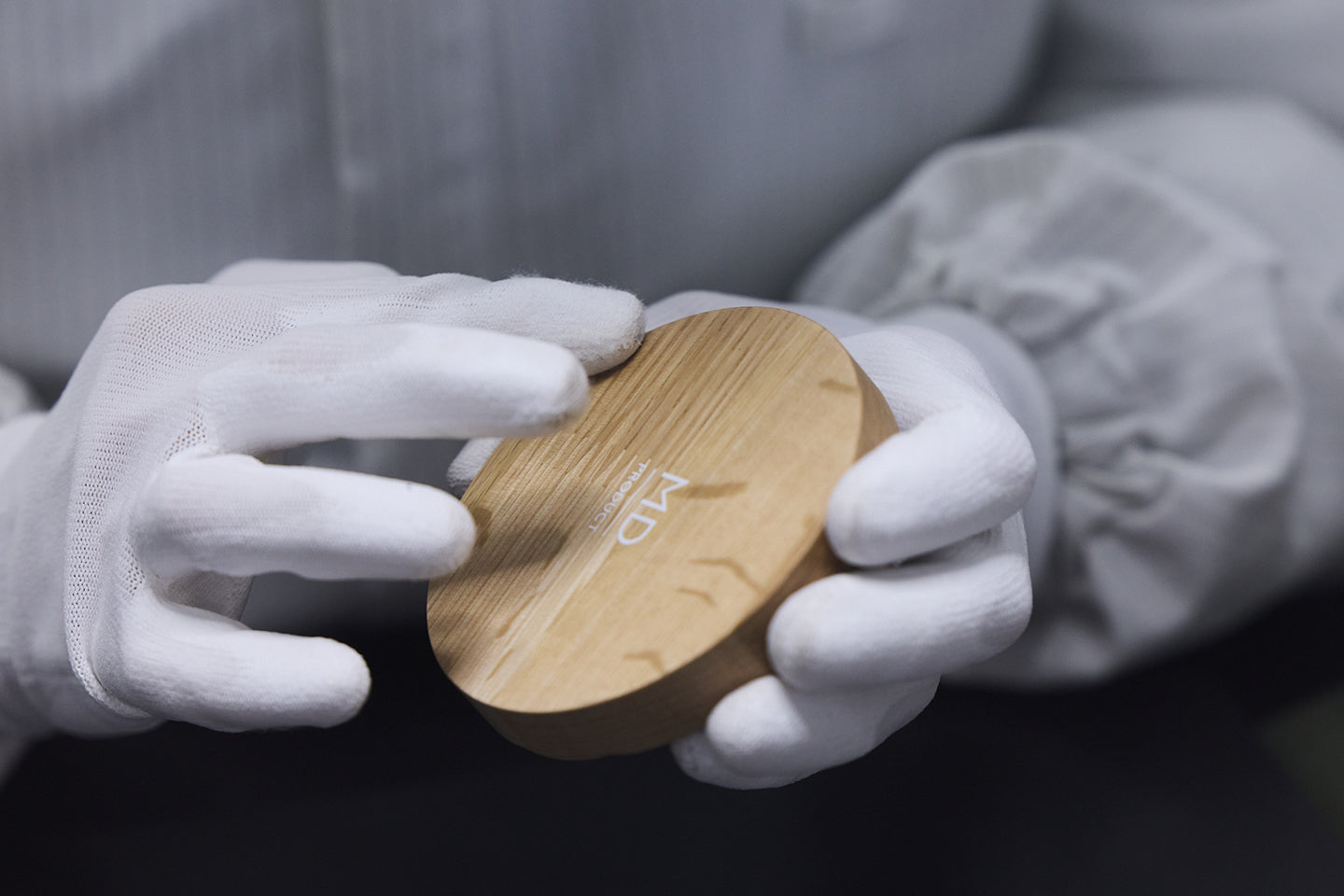
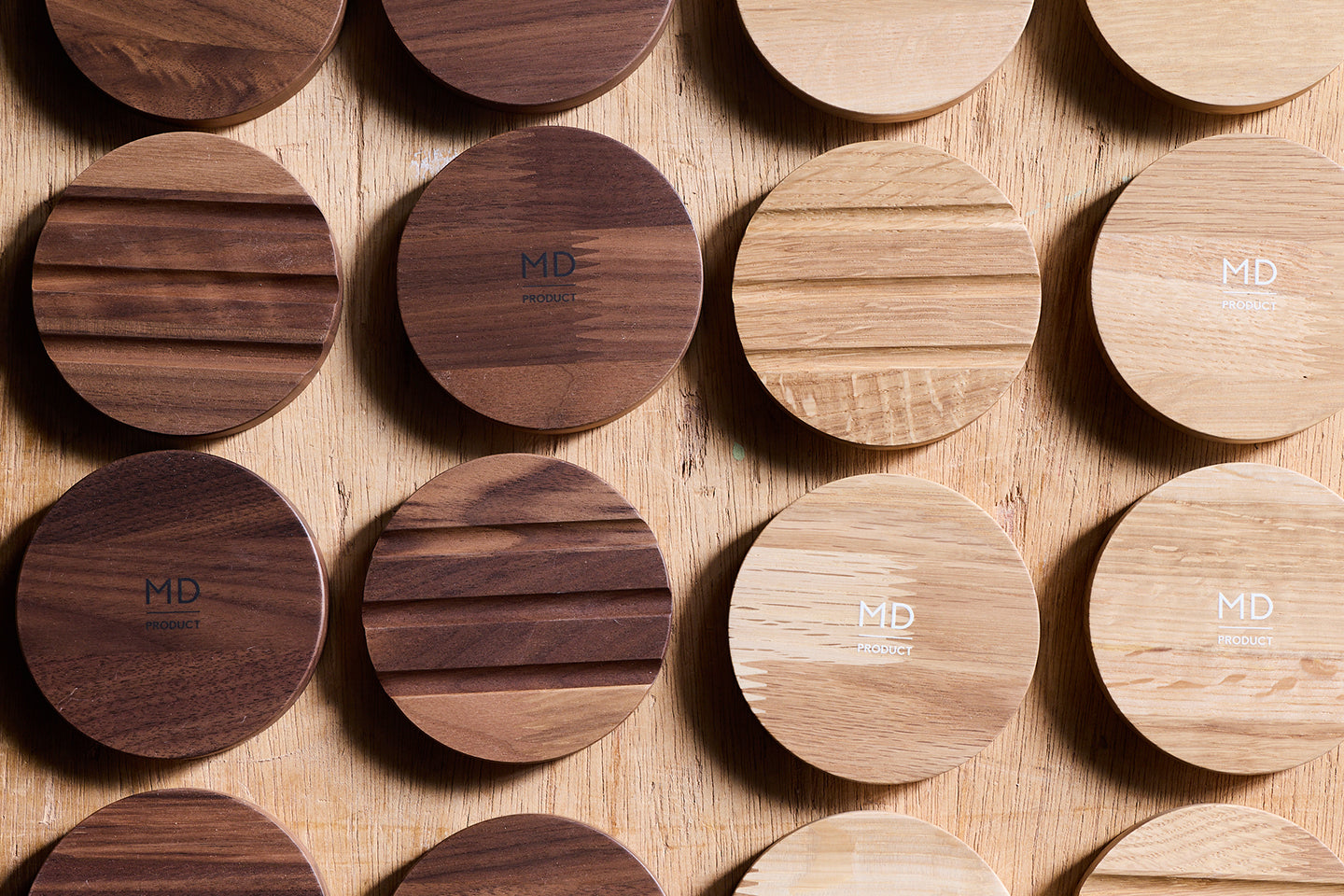
Small pieces of wood are put to use through a technique called “finger jointing,” which connects pieces together like interlocking fingers.
The pattern created by each joint is unique, making every piece one of a kind.
Paper and wood. Though different in nature, both quietly become part of our everyday lives, growing alongside us over time.
We hope these are tools that bring a sense of comfort through their materials and the quiet assurance of thoughtful craftsmanship—becoming a natural part of your everyday life.